A nurse is caring for a terminally ill client who is receiving hospice care at home. The client states, "I'm not afraid of dying, but I'm worried about how my family will cope after I'm gone."
What is the most appropriate response by the nurse?
A nurse is caring for a terminally ill client who is receiving hospice care at home. The client states, "I'm not afraid of dying, but I'm worried about how my family will cope after I'm gone."
What is the most appropriate response by the nurse?
A. “Tell me about your relationship with your family.”
[59%]
B. “You seem to be at peace with dying, which is a good place to be.”
[1%]
C. “Would you like me to help connect your family with grief support services?”
[38%]
D. “Most families eventually find their own way to move on.”
[1%]
Statistics
Subject/Lesson
Subject
Mental Health
Lesson
Mental Health
Client Need
Test Plan
Psychosocial Integrity
Related Topic
End of Life Care
Item Type
Item Type
Application
Explanation
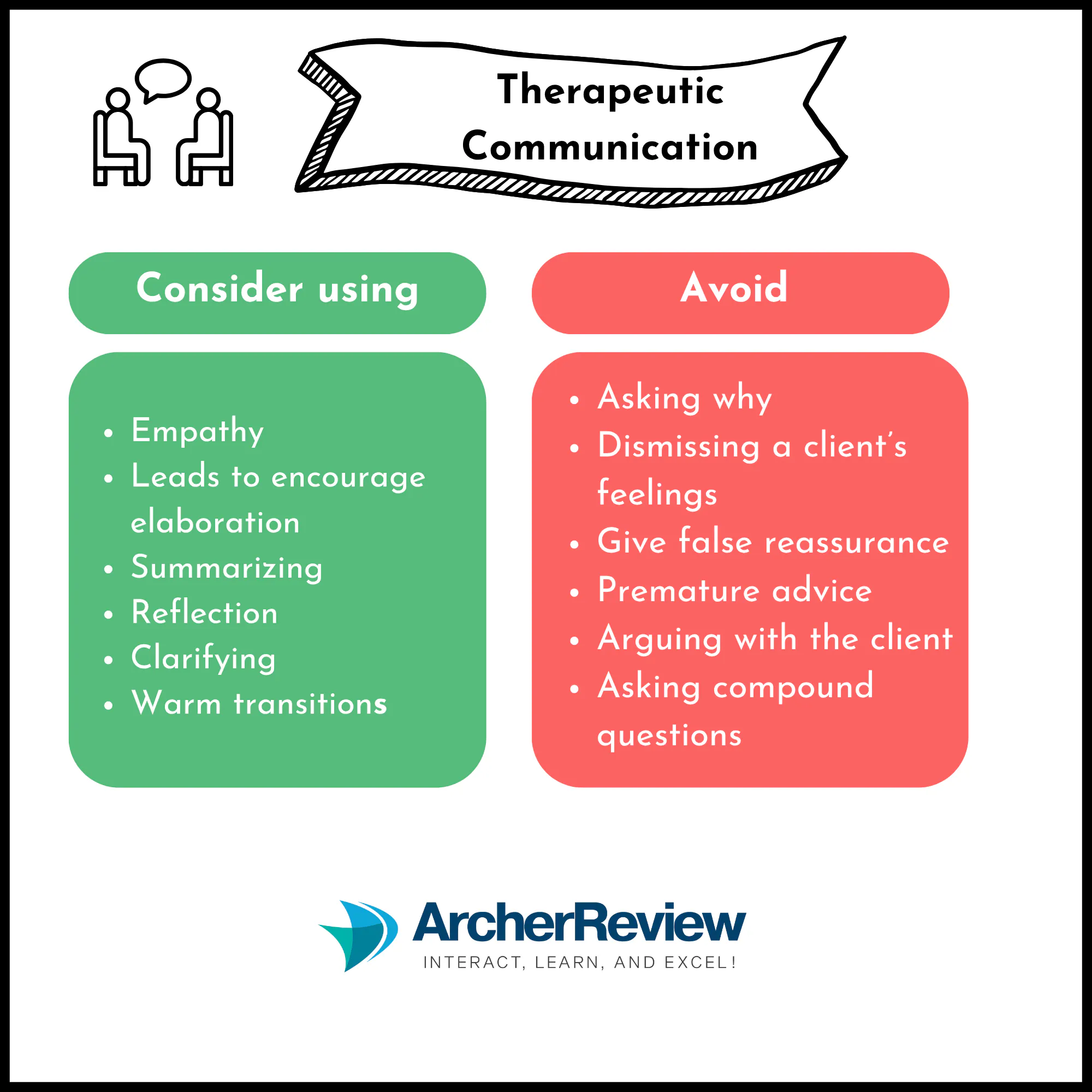
Choice C is correct. This is the most appropriate response. It demonstrates therapeutic communication, emotional support, and resource coordination—all essential nursing actions in hospice care. The nurse validates the client's concern without minimizing it and offers an actionable, compassionate intervention.
Choice A is incorrect. While this open-ended question uses a therapeutic communication technique, it does not address the client's specific concern, which is about how the family will cope after death, not about the current family dynamic. This response may focus on past or unrelated relational details instead of offering meaningful or anticipatory support. It delays effective intervention and lacks clear direction.
Choice B is incorrect. This is a closed and assumptive statement. It may come off as dismissive by focusing only on the client's acceptance of death, rather than addressing the central concern about the family's coping. It reflects a one-sided validation and ends the conversation instead of opening space for support or solutions.
Choice D is incorrect. This is an example of false reassurance. It attempts to soothe the client without offering any real support or resources. It lacks therapeutic intent and undermines the client's emotional reality. Statements like this can make clients feel dismissed and may erode trust.
Related Videos
2 Key Topics
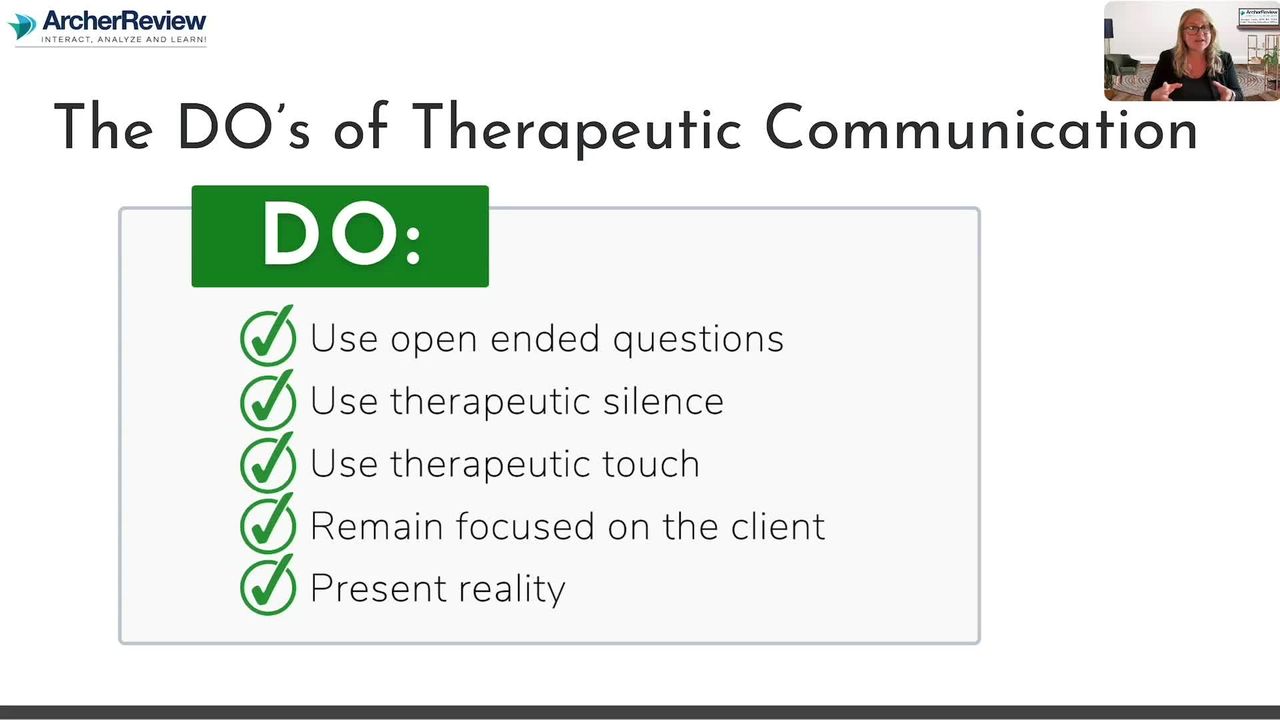
Therapeutic communication
13.3 Therapeutic Communication & Environment
Additional Info