The nurse is caring for a client whose spouse died 13 months ago. The client states, “I still cry every day, and I haven’t been able to go back to work. I don’t think I’ll ever move on.”
The nurse recognizes that this client is most likely experiencing
The nurse is caring for a client whose spouse died 13 months ago. The client states, “I still cry every day, and I haven’t been able to go back to work. I don’t think I’ll ever move on.”
The nurse recognizes that this client is most likely experiencing
A. normal grieving.
[7%]
B. complicated grieving.
[72%]
C. anticipatory grieving.
[10%]
D. disenfranchised grieving.
[10%]
Statistics
Subject/Lesson
Subject
Mental Health
Lesson
Mental Health
Client Need
Test Plan
Psychosocial Integrity
Related Topic
Grief and Loss
Item Type
Item Type
Knowledge/Comprehension
Explanation
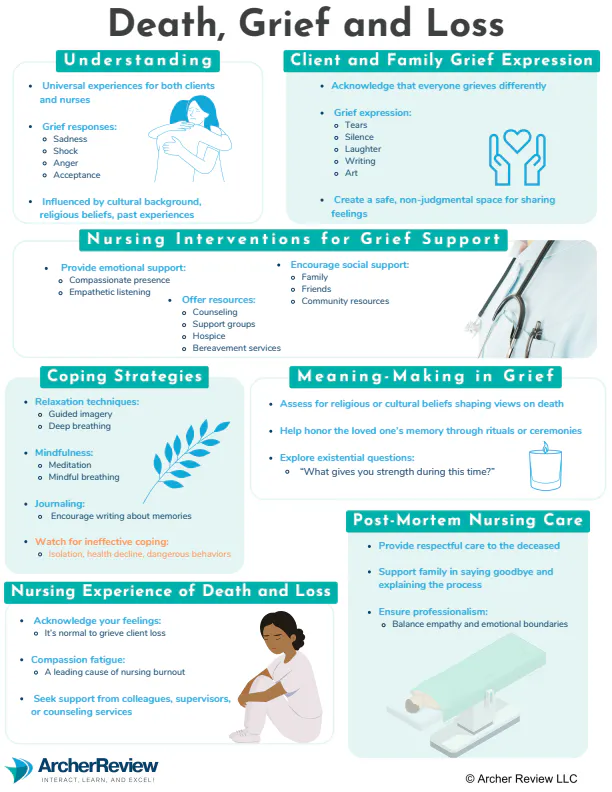
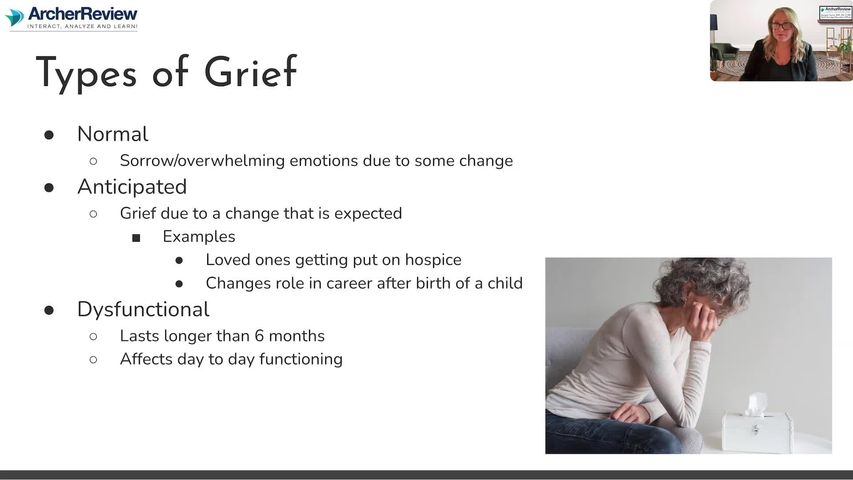
Choice B is correct. Complicated grief is a prolonged and intense grieving process that impairs functioning. In this scenario, the client is unable to resume normal activities (e.g., returning to work) and expresses hopelessness 13 months after the loss. These are hallmark features of complicated grief.
Choice A is incorrect. While grief varies, most individuals begin to adapt over time. Persistent and debilitating grief 13 months later indicates a pathological response, not typical bereavement.
Choice C is incorrect. Anticipatory grief occurs before a loss, such as when a loved one is terminally ill. In this case, the loss has already occurred.
Choice D is incorrect. This type of grief occurs when a loss is not recognized by society (e.g., loss of a secret partner). The client lost a spouse, a socially recognized loss, making this option inappropriate.
Related Videos
2 Key Topics
Grief
13.2 End-of-Life & Grief Care
Additional Info
✓ A person experiencing complicated grief may feel an intense yearning for the deceased or become consumed by persistent thoughts about them.
✓ In children and adolescents, this focus may center more on the details surrounding the death itself.
✓ This condition often leads to substantial emotional distress and difficulties in carrying out everyday responsibilities at home, work, or in other key areas of life.
✓ The enduring grief severely disrupts normal functioning in a way that goes beyond typical mourning.