The nurse is assessing a client who reports nightmares, flashbacks to a prior event, and intrusive thoughts. The client is at highest risk of developing
The nurse is assessing a client who reports nightmares, flashbacks to a prior event, and intrusive thoughts. The client is at highest risk of developing
A. panic disorder.
[2%]
B. bipolar disorder.
[1%]
C. schizophrenia.
[1%]
D. post-traumatic stress disorder.
[96%]
Statistics
Subject/Lesson
Subject
Mental Health
Lesson
Mental Health
Client Need
Test Plan
Psychosocial Integrity
Related Topic
Sensory/Perceptual Alterations
Item Type
Item Type
Analysis
Explanation
Choice D is correct. Post-traumatic stress disorder (PTSD) is characterized by ongoing and unyielding nightmares, flashbacks to a previous event, and intrusive, threatening thoughts. Post-traumatic stress disorder occurs primarily among those who have witnessed and/or been exposed to a severe traumatic event (i.e., warfare, rape, witnessing a murder, etc.) likely to invoke feelings of fear, helplessness, or horror in the individual who witnesses the event.
Choice A is incorrect. A panic disorder occurs when the client experiences repeated panic attacks, typically accompanied by fears about future attacks or changes in behavior to avoid situations that might predispose the client to additional attacks.
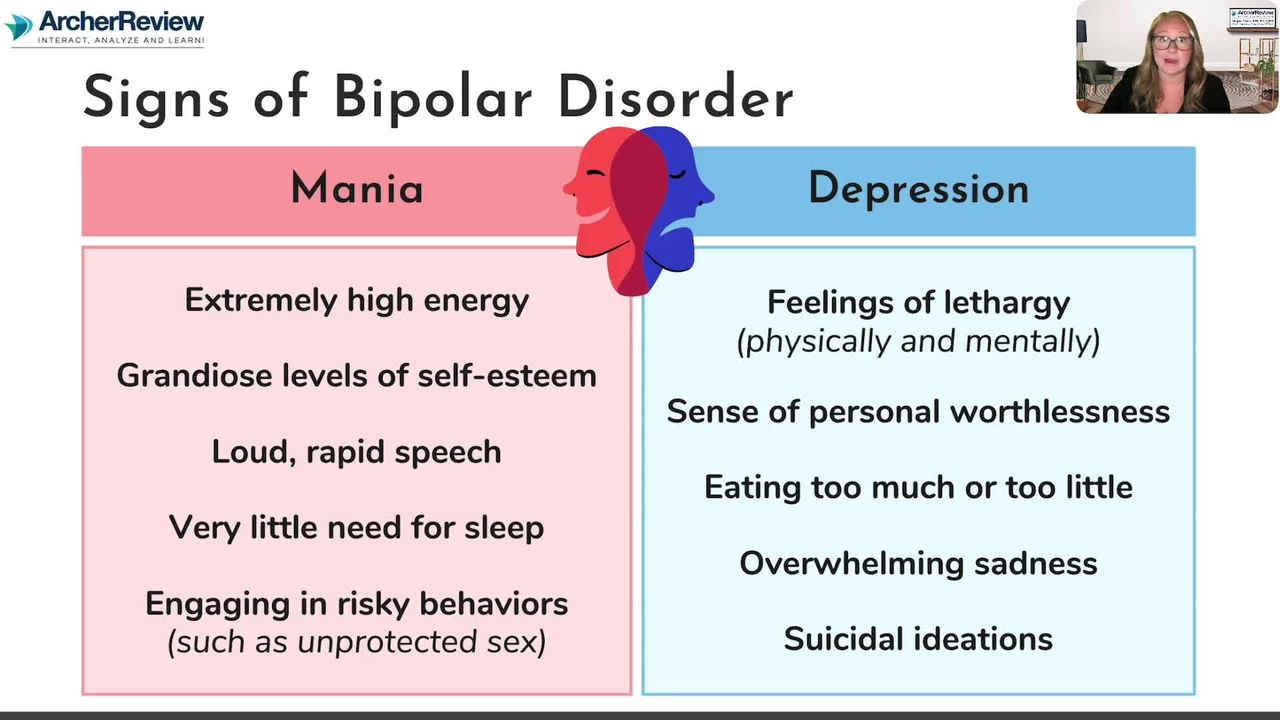
Choice B is incorrect. Bipolar disorder is characterized by alternating moods, depression, hypomania, and mania. This client has no cyclical type of mood shifts reported in their manifestations.
Choice C is incorrect. Schizophrenia is a psychotic disorder that causes pervasive negative and positive symptoms. None of the manifestations the client reports support schizophrenia, as hallucinations, delusions, and cognitive deficits are present in this disorder.
Learning Objective
When evaluating a client affected by nightmares, flashbacks to a previous event, and intrusive, threatening thoughts, identify post-traumatic stress disorder (PTSD) as the disorder this client is most likely experiencing.
Related Videos
2 Key Topics
Post Traumatic Stress Disorder
32.3 Major Psychiatric Disorders
Additional Info
✓ Symptoms of post-traumatic stress disorder can be subdivided into categories: intrusions, avoidance, negative alterations in cognition and mood, and alterations in arousal and reactivity.
✓ Diagnosis is based on history.
✓ Treatment often consists of exposure therapy and drug therapy (most commonly, selective serotonin reuptake inhibitors (SSRIs)).
✓ Psychotherapy remains the mainstay treatment.
