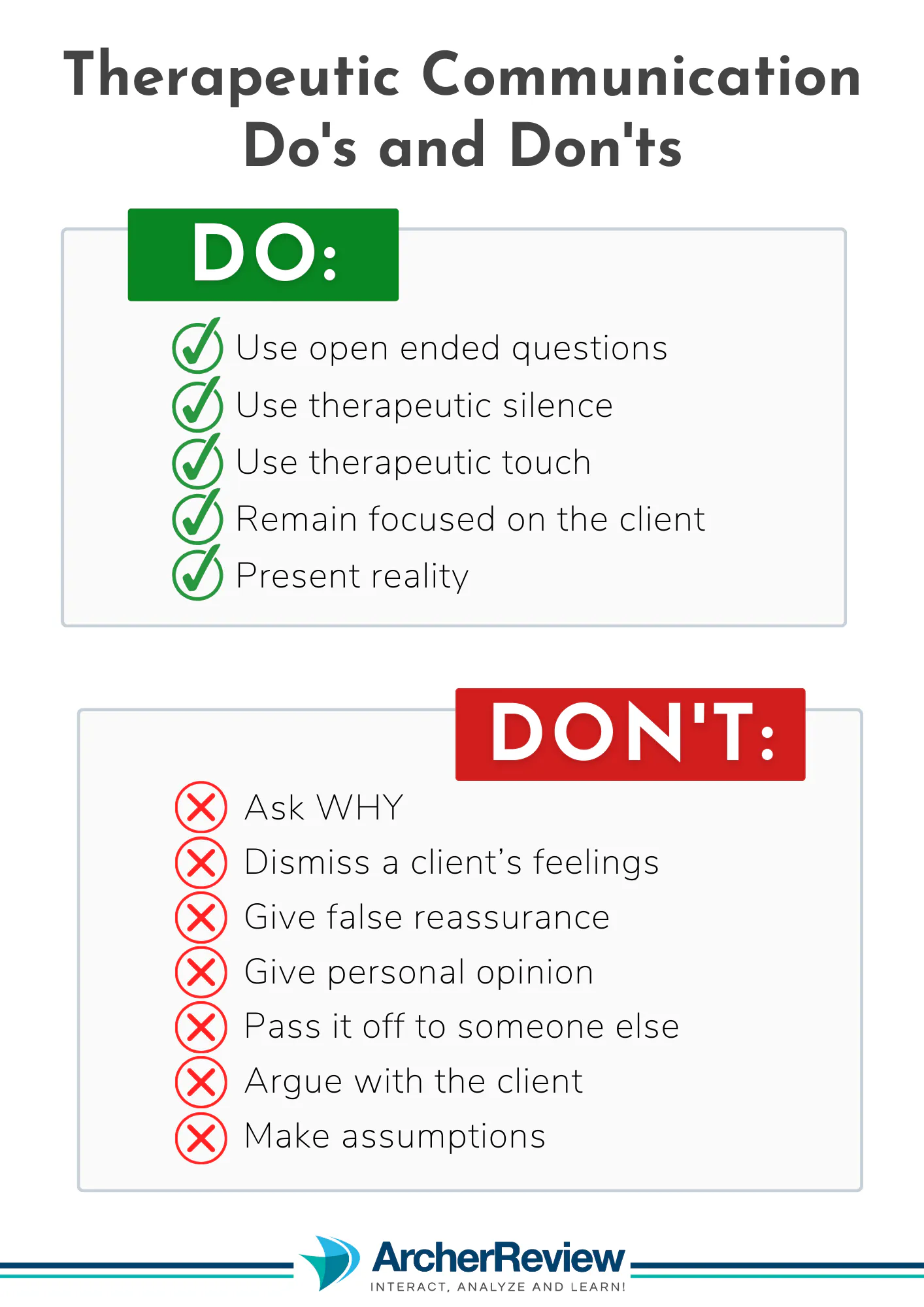
A nurse is caring for a client with schizophrenia who is experiencing delusions and hallucinations. The nurse understands which of the following therapeutic communication techniques is appropriate for establishing a therapeutic relationship.
A nurse is caring for a client with schizophrenia who is experiencing delusions and hallucinations. The nurse understands which of the following therapeutic communication techniques is appropriate for establishing a therapeutic relationship.
A. Offering reassurance and substantiating the client's delusions
[7%]
B. Challenging the client's beliefs and encouraging reality testing
[6%]
C. Encouraging the client to avoid discussing their delusions and hallucinations to prevent reinforcing them.
[6%]
D. Active listening and empathy, acknowledging the client's feelings
[81%]
Statistics
Subject/Lesson
Subject
Mental Health
Lesson
Mental Health
Client Need
Test Plan
Psychosocial Integrity
Related Topic
Therapeutic Communication
Item Type
Item Type
Knowledge/Comprehension
Explanation
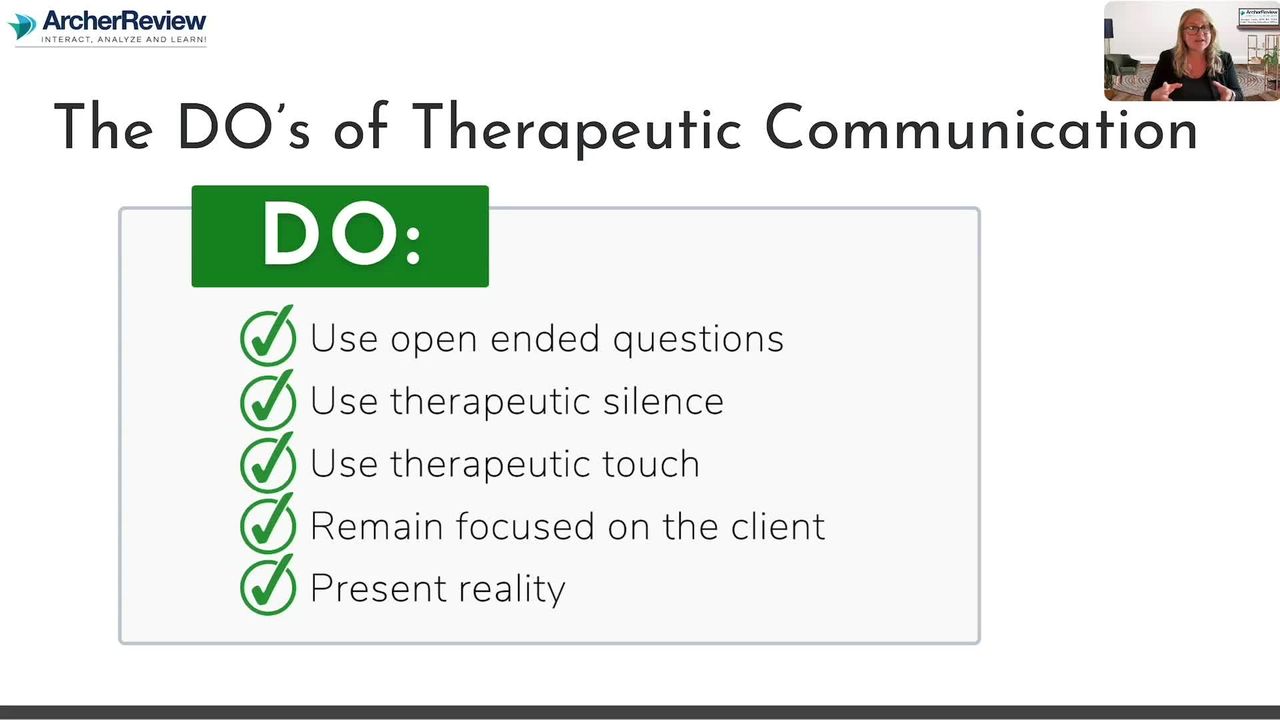
Choice D is correct. When working with clients diagnosed with schizophrenia who experience delusions and hallucinations, establishing a therapeutic relationship is essential. The most appropriate therapeutic communication technique in this situation is active listening and empathy, acknowledging the client's feelings. This technique helps build trust and rapport with the client by showing understanding and validating their emotional experiences. It also provides an opportunity for the client to express their thoughts and feelings without judgment.
Choice A is incorrect. Offering reassurance and substantiating the client's delusions may reinforce their false beliefs and hinder the therapeutic process.
Choice B is incorrect. Challenging the client's beliefs and encouraging reality testing can be confrontational and may increase anxiety or resistance.
Choice C is incorrect. Encouraging avoidance of discussing their experiences can make the client feel unheard and dismissed. It's important to create an environment where the client feels safe to express themselves, even if their experiences are not grounded in reality.
Related Videos
4 Key Topics
Schizophrenia
32.3 Major Psychiatric Disorders
Therapeutic communication
13.3 Therapeutic Communication & Environment
Additional Info
✓ Schizophrenia affects men and women equally
✓ In a therapeutic relationship, the nurse maximizes communication skills, understanding of human behaviors, and personal strengths to enhance the client's growth.
✓ Schizophrenia develops gradually and insidiously, usually beginning between 15 and 25 years of age.
✓ All people diagnosed with schizophrenia have at least one psychotic symptom, such as hallucinations, delusions, and/or disorganized speech or thought.