The nurse is caring for assigned clients. The nurse should recognize that the client at most significant risk for postpartum hemorrhage (PPH) is the client who has which of the following?
The nurse is caring for assigned clients. The nurse should recognize that the client at most significant risk for postpartum hemorrhage (PPH) is the client who has which of the following?
A. Uterine atony and delivered with the assistance of forceps
[86%]
B. Postpartum urinary incontinence and diuresis
[1%]
C. An active outbreak of genital herpes and had a cesarean section
[5%]
D. Gestational diabetes and has postpartum hyperglycemia
[7%]
Statistics
Subject/Lesson
Subject
Maternal & Newborn Health
Lesson
Postpartum
Client Need
Test Plan
Health Promotion and Maintenance
Related Topic
Ante/Intra/Postpartum and Newborn Care
Item Type
Item Type
Analysis
Explanation
Choice A is correct. Uterine atony is the most common cause of PPH. This is when the uterus fails to contract after delivery. Additionally, delivery with instruments such as forceps raises the risk of PPH because of the trauma the devices may cause.
Choice B is incorrect. Post-partum urinary incontinence is a common occurrence along with maternal diuresis. This occurs because fluids shift from the extravascular space to the intravascular space. Both findings are normal and do not place the patient at risk for PPH.
Choice C is incorrect. An outbreak of herpes is not a risk factor for PPH. However, a cesarean section most certainly would raise the risk for PPH.
Choice D is incorrect. Gestational diabetes may increase the risk of a macrosomia fetus, which would cause PPH; however, this is not indicated in the choice. Finally, post-partum hyperglycemia may occur but is not a risk factor for PPH. Insulin sensitivity may take time for it to normalize.
Related Videos
2 Key Topics
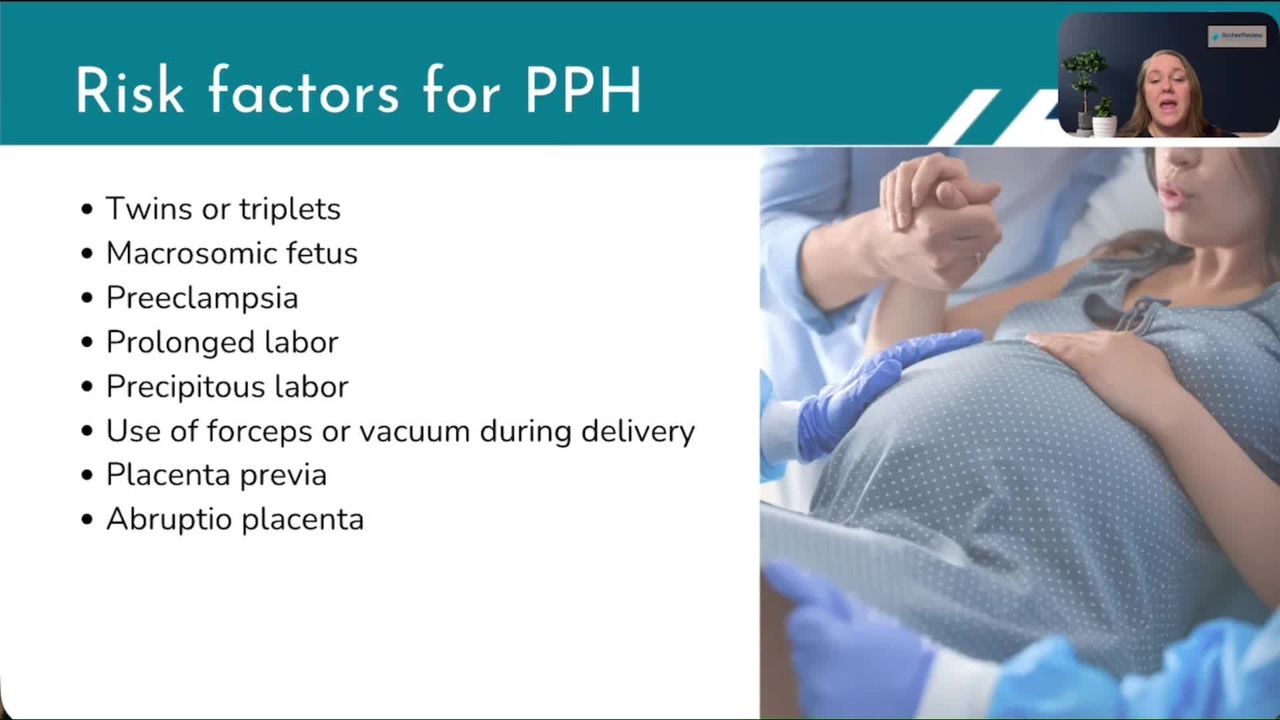
Postpartum Hemorrhage
30.5 Postpartum Complications & Mental Health
Additional Info
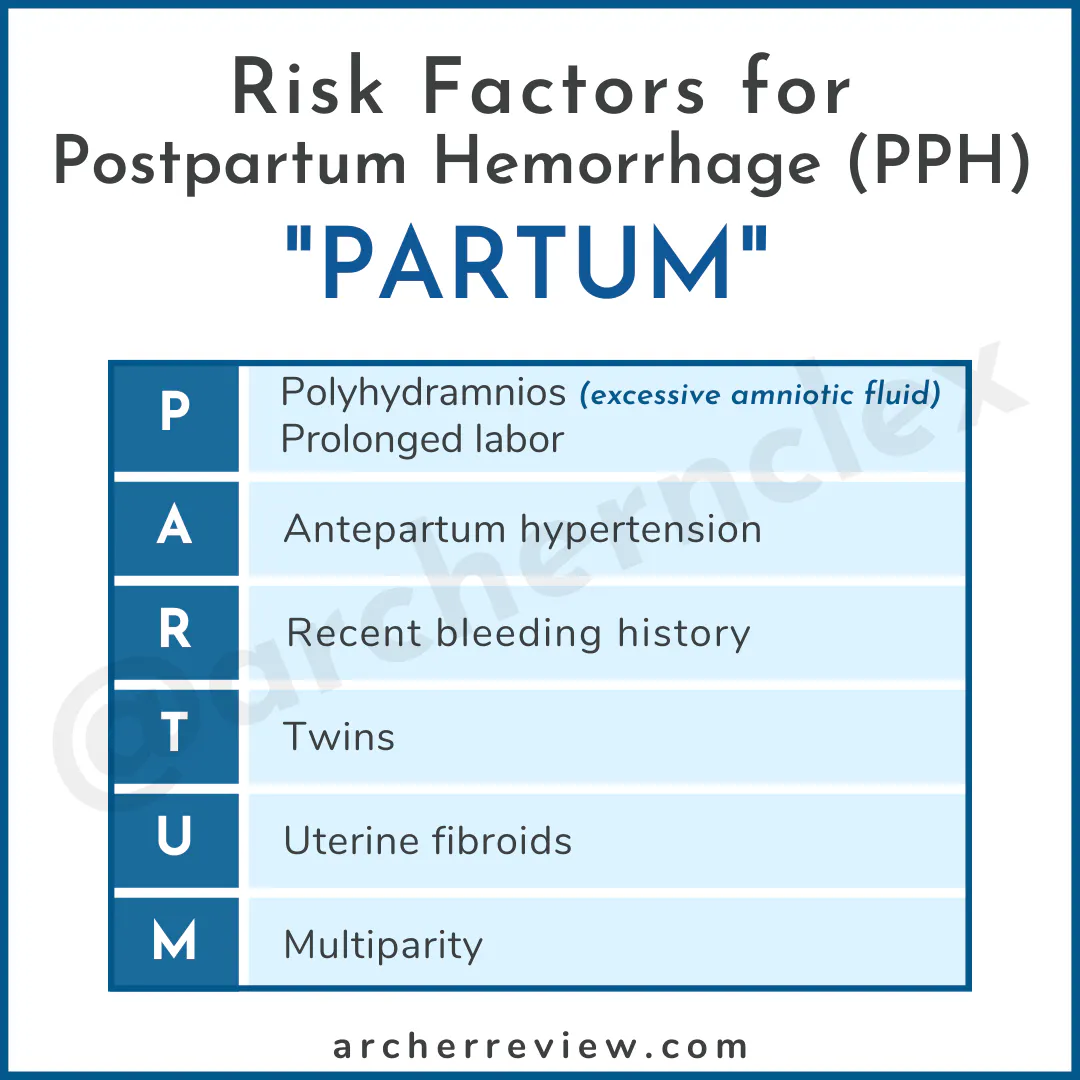
✓ PPH is an obstetric emergency. Risk factors for PPH include –
- Uterine atony
- Prolonged labor
- Instrument-assisted delivery
- Preeclampsia and eclampsia
- Fetal macrosomia
- Multifetal gestation
