The nurse is caring for a client three hours postpartum after delivering a term newborn infant. Which assessment finding would indicate an early sign of postpartum hemorrhage?
The nurse is caring for a client three hours postpartum after delivering a term newborn infant. Which assessment finding would indicate an early sign of postpartum hemorrhage?
A. Heart rate change from 80 to 125 bpm
[79%]
B. Blood pressure change from 125/90 to 119/82 mmHg
[11%]
C. A decrease in respiratory rate from 22 to 16 breaths per minute
[3%]
D. Saturation of one peri-pad since delivery
[6%]
Statistics
Subject/Lesson
Subject
Maternal & Newborn Health
Lesson
Postpartum
Client Need
Test Plan
Reduction of Risk Potential
Related Topic
Changes/Abnormalities in Vital Signs
Item Type
Item Type
Analysis
Explanation
Choice A is correct. An early sign of postpartum hemorrhage is tachycardia—a heart rate change from 80 to 125 bpm warrants further investigation.
Choice B is incorrect. The client has had a decline in their blood pressure. However, hypotension is a late sign of postpartum hemorrhage. This client's blood pressure does not meet the clinical criteria of hypotension (blood pressure of 90/60 mm Hg or less).
Choice C is incorrect. A respiratory rate decrease from 22 to 16 breaths per minute is an expected finding after delivery and is not alarming. A clinical sign associated with postpartum hemorrhage would be tachypnea.
Choice D is incorrect. Following the delivery of a term newborn, the female should not saturate more than one peri-pad every two hours. This client is three hours postpartum, and it is not concerning that the client has only saturated one peri-pad.
Related Videos
2 Key Topics
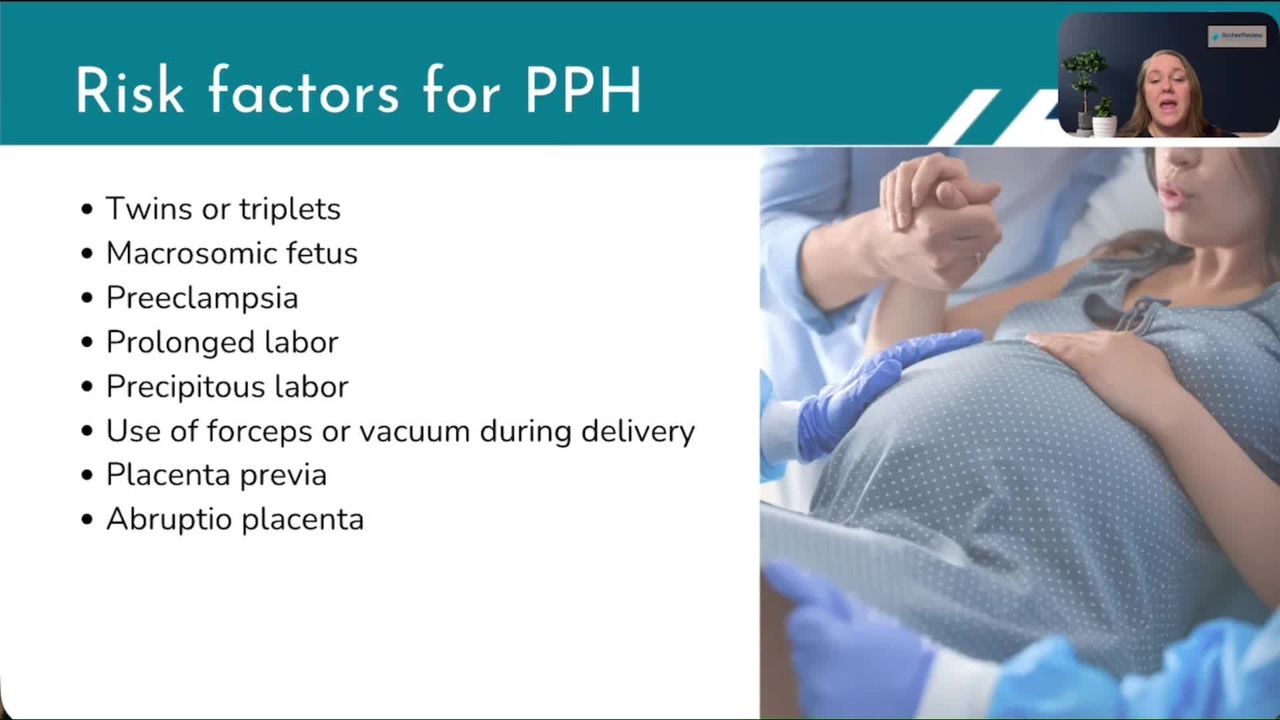
Postpartum Hemorrhage
30.5 Postpartum Complications & Mental Health
Additional Info
✓ Excessive blood loss after childbirth, which can occur due to factors such as uterine atony or trauma, can lead to postpartum hemorrhage (PPH).
✓ If PPH is suspected, the nurse should promptly notify the healthcare provider and initiate interventions, which may include fundal massage to promote uterine contraction, administration of uterotonic medications (e.g., oxytocin), and, if necessary, blood transfusion.
✓ In addition to tachycardia, other signs and symptoms of PPH may include excessive or heavy vaginal bleeding, hypotension (low blood pressure), pallor, cool and clammy skin, and a feeling of lightheadedness or dizziness.
