When assessing a postpartum client, a nurse notes that the client has soaked three perineal pads in the three hours since delivery. The nurse also notes a soft fundus. The initial action for the nurse would be which of the following?
When assessing a postpartum client, a nurse notes that the client has soaked three perineal pads in the three hours since delivery. The nurse also notes a soft fundus. The initial action for the nurse would be which of the following?
A. Insert vaginal packing
[2%]
B. Massage the client’s fundus
[91%]
C. Apply an ice pack over the client’s perineal area
[4%]
D. Administer packed red blood cells
[3%]
Statistics
Subject/Lesson
Subject
Maternal & Newborn Health
Lesson
Postpartum
Client Need
Test Plan
Health Promotion and Maintenance
Related Topic
Ante/Intra/Postpartum and Newborn Care
Item Type
Item Type
Application
Explanation
Choice B is correct. Uterine atony results from the inability of the uterine muscle to contract adequately following birth, leading to vaginal bleeding and/or postpartum hemorrhage. By performing a fundal massage, the nurse will attempt to stimulate the client's uterus to contract.
Choice A is incorrect. Only a physician should insert vaginal packing.
Choice C is incorrect. The application of an ice pack over the client's perineum would do nothing to alleviate or address the client's issue.
Choice D is incorrect. The administration of blood products such as packed RBCs is incorrect for numerous reasons. First, there is no indication that a physician's order to administer RBCs exists. Second, there is no indication that this client has a low hemoglobin level. Third, although one may assume this client was typed and screened upon admission and likely signed a consent to receive blood products, one should not make such assumptions, instead taking the time to verify for oneself (in the absence of a life-threatening emergency).
Learning Objective
Correlate findings of vaginal bleeding and soft fundus in a postpartum client to the symptoms of uterine atony and subsequently utilize a nursing intervention of fundal massage to stimulate the client's uterus to contract.
Related Videos
3 Key Topics
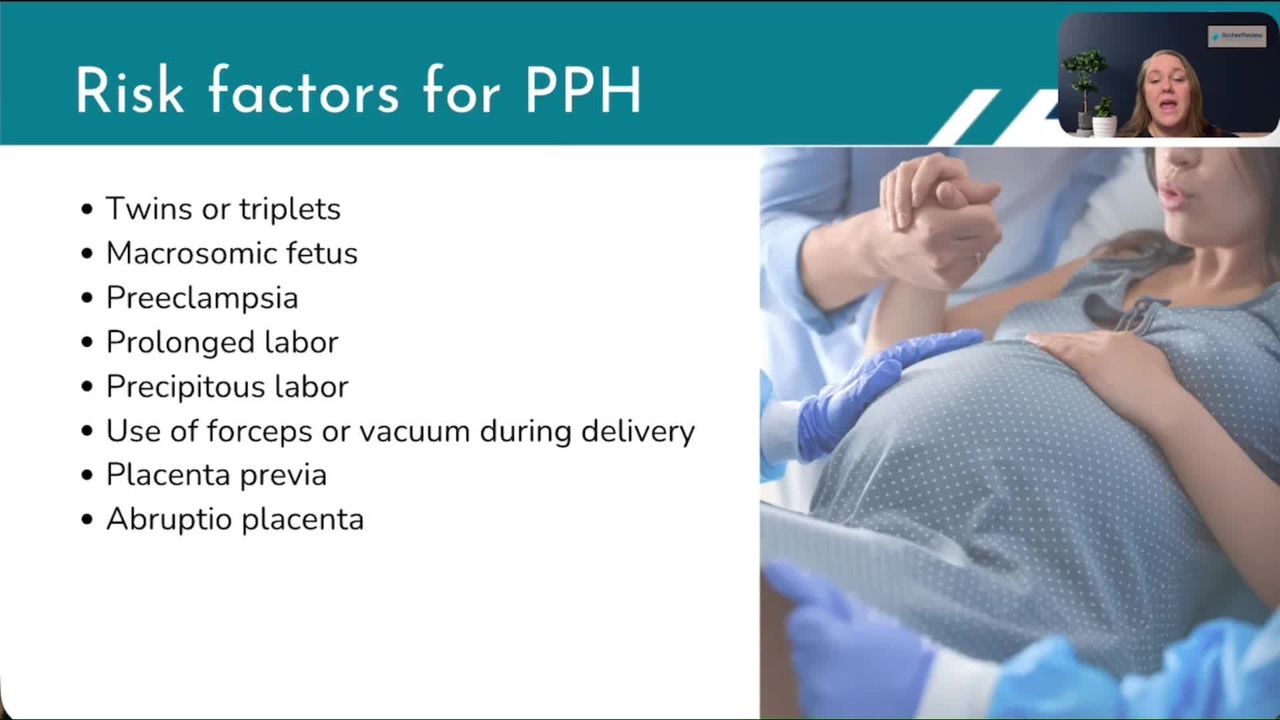
Postpartum Hemorrhage
30.5 Postpartum Complications & Mental Health
Additional Info
Uterine atony is a principal cause of postpartum hemorrhage, an obstetric emergency.
Although not an inclusive list, some common risk factors for uterine atony include:
- Prolonged labor
- Precipitous labor
- Fibroid uterus
- Prolonged use of oxytocin
- Retained placental tissue
- Placental disorders (such as morbidly adherent placenta, placenta previa, and abruption placentae)
- Body mass index (BMI) above 40
