The nurse is preparing a staff education program about infants at risk for phenylketonuria (PKU).
Which of the following information should the nurse provide? Select all that apply.
The nurse is preparing a staff education program about infants at risk for phenylketonuria (PKU).
Which of the following information should the nurse provide? Select all that apply.
Statistics
Subject/Lesson
Subject
Maternal & Newborn Health
Lesson
Newborn
Client Need
Test Plan
Physiological Adaptation
Related Topic
Alterations in Body Systems
Item Type
Item Type
Knowledge/Comprehension
Explanation
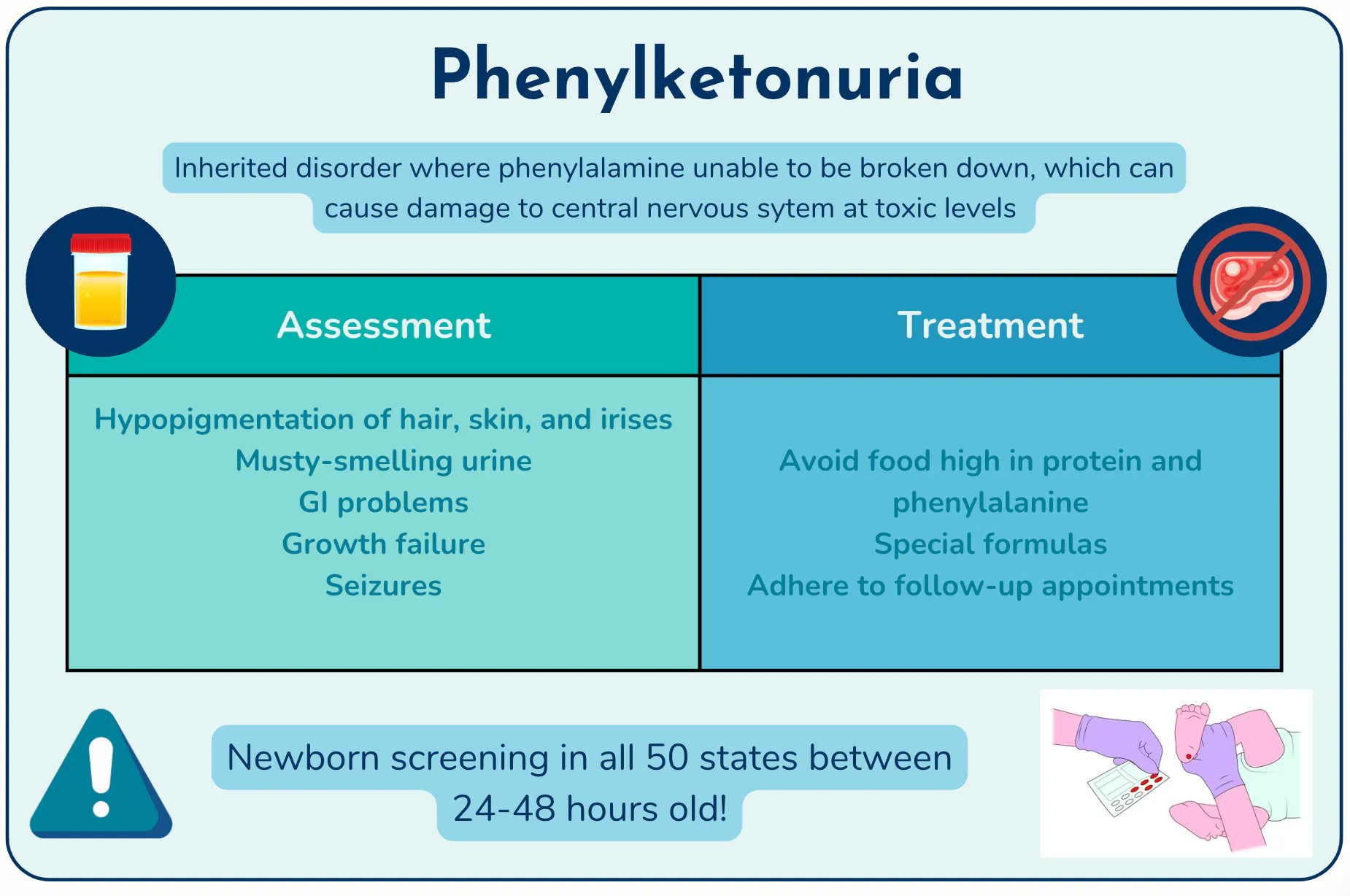
Choice B is correct. Phenylketonuria, or PKU, is a genetic disorder that results in central nervous system damage from toxic levels of the essential amino acid phenylalanine. The musty odor, urine smell, and hypopigmentation of the hair, skin, and irises are signs of PKU.
Choice C is correct. Hypopigmentation of the hair, skin, and irises are signs of PKU.
Choice D is correct. Common manifestations of PKU include lethargy, poor feeding, vomiting, diarrhea, hypoglycemia, metabolic acidosis, respiratory distress, apnea, hypothermia, coma and seizures.
Choice A is incorrect. The disease is inherited as an autosomal recessive manner.
Choice E is incorrect. PKU is caused by an absence of the enzyme phenylalanine hydroxylase which is needed to metabolize phenylalanine.
Related Videos
2 Key Topics
Phenylketonuria (PKU)
31.12 Hematologic & Metabolic Conditions
Additional Info
✓ The PKU newborn screening is done through drops of blood from the newborn's heel onto a special type of paper
✓ PKU symptoms tend to present closer to 6 months of age