The nurse is caring for a newborn with erythroblastosis fetalis.
The nurse understands that this disease is characterized by
The nurse is caring for a newborn with erythroblastosis fetalis.
The nurse understands that this disease is characterized by
A. excessive red blood cell production that requires therapeutic blood donation.
[27%]
B. incompatibility between maternal and fetal blood.
[55%]
C. an excessive amount of circulating white blood cells (WBC).
[4%]
D. erythrocytes become shaped like a sickle and sensitive to hypoxia.
[14%]
Statistics
Subject/Lesson
Subject
Maternal & Newborn Health
Lesson
Newborn
Client Need
Test Plan
Physiological Adaptation
Related Topic
Pathophysiology
Item Type
Item Type
Knowledge/Comprehension
Explanation
Choice B is correct. Infants with erythroblastosis fetalis are anemic from the destruction of RBCs. Severely affected infants may develop hydrops fetalis, a severe anemia resulting in heart failure and generalized edema. This hemolysis stems from maternal-fetal blood incompatibility.
Choice A is incorrect. Polycythemia vera is characterized by excessive red blood cell production that requires therapeutic blood donation.
Choice C is incorrect. Excessive WBCs would be leukocytosis, a non-specific indicator of possible infection or inflammation.
Choice D is incorrect. Sickle cell anemia fits the description of erythrocytes becoming shaped like a sickle and sensitive to hypoxia.
Related Videos
2 Key Topics
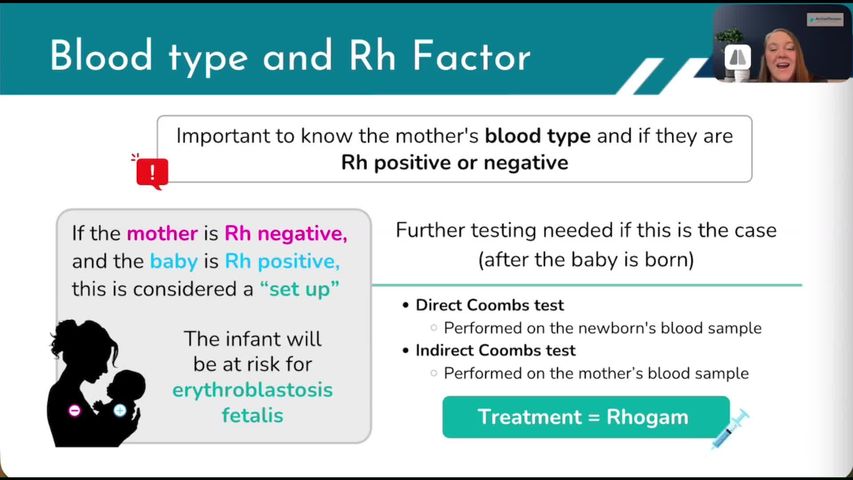
Blood Type & Rh Factor
28.3 Routine Prenatal Screening
Additional Info
✓ Rh immune globulin (RhoGAM) is given to the unsensitized Rho(D)-negative woman to prevent the development of anti-Rh antibodies.
✓ The use of Rho(D) immune globulin (RhoGAM) has greatly decreased the incidence of erythroblastosis fetalis.
