The nurse is caring for a newborn with erythroblastosis fetalis. The nurse understands that this disease is characterized by
The nurse is caring for a newborn with erythroblastosis fetalis. The nurse understands that this disease is characterized by
A. excessive red blood cell production that requires therapeutic blood donation.
[13%]
B. hemolysis of fetal erythrocytes resulting from incompatibility between maternal and fetal blood
[79%]
C. inability to metabolize amino acid phenylalanine, causing high levels of phenylalanine.
[2%]
D. erythrocytes become shaped like a sickle and sensitive to hypoxia.
[6%]
Statistics
Subject/Lesson
Subject
Maternal & Newborn Health
Lesson
Newborn
Client Need
Test Plan
Physiological Adaptation
Related Topic
Pathophysiology
Item Type
Item Type
Knowledge/Comprehension
Explanation
Choice B is correct. Infants with erythroblastosis fetalis are anemic from the destruction of RBCs. Severely affected infants may develop hydrops fetalis, which is a severe anemia that results in heart failure and generalized edema. This hemolysis stems from maternal-fetal blood incompatibility.
Choices A, C, and D are incorrect. Polycythemia vera is characterized by excessive red blood cell production that requires therapeutic blood donation. The inability to metabolize amino acid phenylalanine, causing high levels of phenylalanine characterizes phenylketonuria. Sickle cell anemia fits the description of erythrocytes becoming shaped like a sickle and sensitive to hypoxia.
Related Videos
2 Key Topics
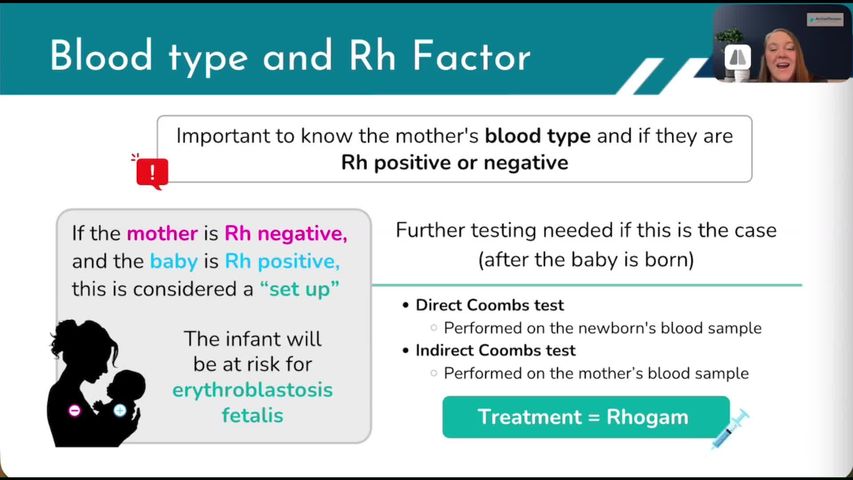
Blood Type & Rh Factor
28.3 Routine Prenatal Screening
Additional Info
The use of Rho(D) immune globulin (RhoGAM) to prevent the mother from forming antibodies against Rh-positive blood has greatly decreased the incidence of erythroblastosis fetalis.
