The nurse is working in the NICU for the morning shift. While assessing four neonates less than 6-hours old, which neonate warrants additional attention from the nurse?
The nurse is working in the NICU for the morning shift. While assessing four neonates less than 6-hours old, which neonate warrants additional attention from the nurse?
A. A neonate with a molded head and overriding sutures.
[3%]
B. A neonate with cyanotic hands and feet that has not passed meconium.
[18%]
C. A neonate that is spitting up excessive mucus, with a temperature of 36.1 °C (97°F), and is dusky in appearance.
[55%]
D. A neonate with abdominal respirations and intermittent tremors of the extremities.
[24%]
Statistics
Subject/Lesson
Subject
Maternal & Newborn Health
Lesson
Newborn
Client Need
Test Plan
Management of Care
Related Topic
Establishing Priorities
Item Type
Item Type
Analysis
Explanation
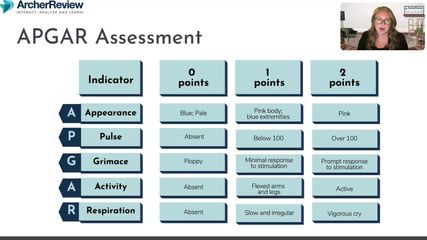
Choice C is correct. A neonate is expected to be pinkish in appearance. Saliva should be minimal and the normal temperature for a newborn is from 36.5 °C to 37 °C. These symptoms could indicate potential respiratory distress or other health issues that require immediate assessment and intervention.
Choice A is incorrect. Molding and overriding sutures in a neonate are normal and may persist for a few days.
Choice B is incorrect. Acrocyanosis in the newborn may be present for 2 to 6 hours. A neonate with cyanotic hands and feet that has not passed meconium may have transient cyanosis, which can be a normal response in newborns. The absence of meconium passage in the first 24 hours is not unusual.
Choice D is incorrect. There is no need to worry about this sign. A neonate with abdominal respirations and intermittent tremors of the extremities may exhibit these behaviors as part of the normal adjustment to extrauterine life
Related Videos
4 Key Topics
Pediatric Vital Signs
31.1 Immediate Newborn Evaluation
Newborn Assessment
31.1 Immediate Newborn Evaluation
Additional Info
✓ Abdominal respirations in a newborn refer to a breathing pattern where the infant primarily uses their abdominal muscles to breathe, rather than their chest muscles. This is a normal and common breathing pattern in newborns and infants.
✓ Incorporate principles of developmental care, such as minimizing noise and providing a calm and soothing environment, to support the newborn's comfort and well-being.
✓ Collaborate with other healthcare professionals, such as neonatologists or pediatricians, if there are any concerns or abnormalities in the newborn's respiratory pattern or if further evaluation and intervention are needed.
