The nurse recognizes that Vitamin K is given to neonates because
The nurse recognizes that Vitamin K is given to neonates because
A. the inability to synthesize it in the intestines without bacterial flora.
[39%]
B. of hemolysis related to hepatic immaturity.
[51%]
C. of the reduced vitamin B12 storage.
[4%]
D. reduced iron storage in the liver and spleen.
[6%]
Statistics
Subject/Lesson
Subject
Maternal & Newborn Health
Lesson
Newborn
Client Need
Test Plan
Physiological Adaptation
Related Topic
Pathophysiology
Item Type
Item Type
Knowledge/Comprehension
Explanation
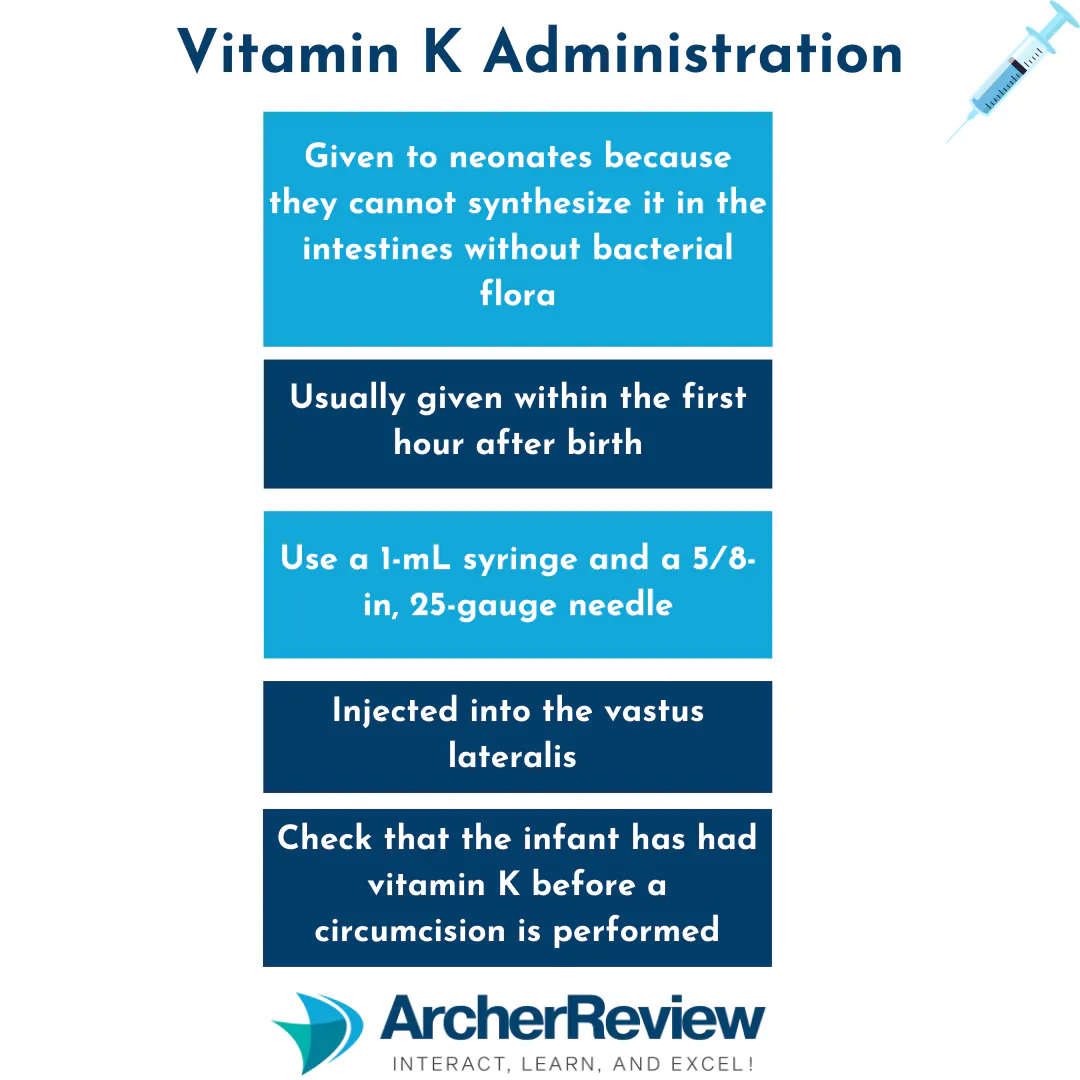
Choice A is correct. Vitamin K is given to neonates because they cannot synthesize it in the intestines without bacterial flora. Vitamin K is usually given within the first hour after birth.
Choice B is incorrect. Hepatic immaturity would cause increased bilirubin levels. The immature liver is unable to metabolize the increased amount of bilirubin that instead accumulates in their blood. This causes the infant to develop jaundice. This is not related to administering vitamin K.
Choice C is incorrect. Reduced vitamin B12 storage may occur because of excessive alcohol exposure or certain gastric surgeries. This has no relevance to the administration of parenteral vitamin K.
Choice D is incorrect. Reduced iron storage in the liver and spleen would lead to the development of iron deficiency, which is not a rationale for vitamin K administration.
Additional Info