Item 1 of 1
- Nurses’ Notes
1800 – A 17-year-old nulliparous client at 37-gestational weeks was admitted to the antepartum unit. The client reports a frontal headache of 8/10, photophobia, and epigastric pain. Magnesium sulfate loading dose and continuous infusion initiated as prescribed.
- Vital Signs
Oral temperature 97° F (36° C); Pulse 88 bpm; Respirations 19; BP 163/113 mm Hg;
Oxygen saturation 96% on room air.
The nurse is caring for a client with severe preeclampsia receiving an infusion of magnesium sulfate.
For each type of assessment, click to specify whether or not the assessment is indicated or not indicated for the magnesium sulfate infusion.

The nurse is caring for a client with severe preeclampsia receiving an infusion of magnesium sulfate.
For each type of assessment, click to specify whether or not the assessment is indicated or not indicated for the magnesium sulfate infusion.
| Type of Assessment | Indicated | Not Indicated |
|---|---|---|
Fetal Heart Rate | ||
Deep Tendon Reflexes | ||
Hourly Blood Glucose | ||
Urine Output | ||
Bowel Sounds | ||
Blood Pressure |
Statistics
Subject/Lesson
Subject
Maternal & Newborn Health
Lesson
Labor/Delivery
Client Need
Test Plan
Health Promotion and Maintenance
Related Topic
Ante/Intra/Postpartum and Newborn Care
Item Type
Item Type
GenerateSolutions
Explanation
- Clinical features of severe preeclampsia include significant hypertension, hyperreflexia, frontal headache, visual disturbances, thrombocytopenia, oliguria, increased creatinine, and epigastric pain.
- The blood pressure is much higher in severe preeclampsia, and the client experiences alterations in clotting and renal function.
- The treatment of choice for severe preeclampsia is a loading dose of magnesium sulfate followed by a continuous infusion.
Magnesium sulfate is a high-risk medication, and the nurse should perform the following frequent assessments –
- Vital signs. Magnesium sulfate, may cause hypotension and bradypnea.
- Uterine contractions and fetal heart rate. Magnesium sulfate may slow the progress of labor.
- Urine output is important to monitor as oliguria may cause hypermagnesemia.
- Deep tendon reflexes, a depression of deep tendon reflexes, is a manifestation of magnesium toxicity.
- Magnesium sulfate levels. Magnesium sulfate toxicity may not correlate with clinical symptoms.
Bowel sounds and hourly glucose are not assessments indicated for an infusion of magnesium sulfate.
Related Videos
5 Key Topics

Preeclampsia
28.5 Infection & Complication Risks
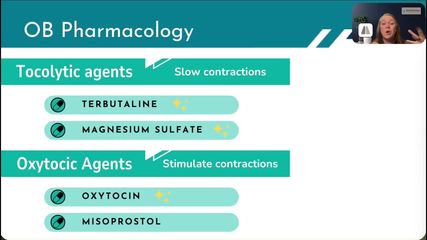
Tocolytics & Oxytotics
30.2 Preterm Labor & Medications
Additional Info
Preeclampsia is a pregnancy complication characterized by high blood pressure and signs of damage to another organ system, most often the liver and kidneys.
- Preeclampsia usually begins after 20 weeks of pregnancy in women whose blood pressure used to be normal. If left untreated, preeclampsia progresses to severe preeclampsia, characterized by organ dysfunction. Finally, if severe preeclampsia goes untreated, an eclamptic seizure may occur.
- Effective treatment for severe preeclampsia is delivery of the baby. If this is not plausible, medications like magnesium sulfate may be utilized. Even after delivering the baby, recovery may not be immediate. Rarely, preeclampsia develops after the delivery of a baby, a condition known as postpartum preeclampsia.
