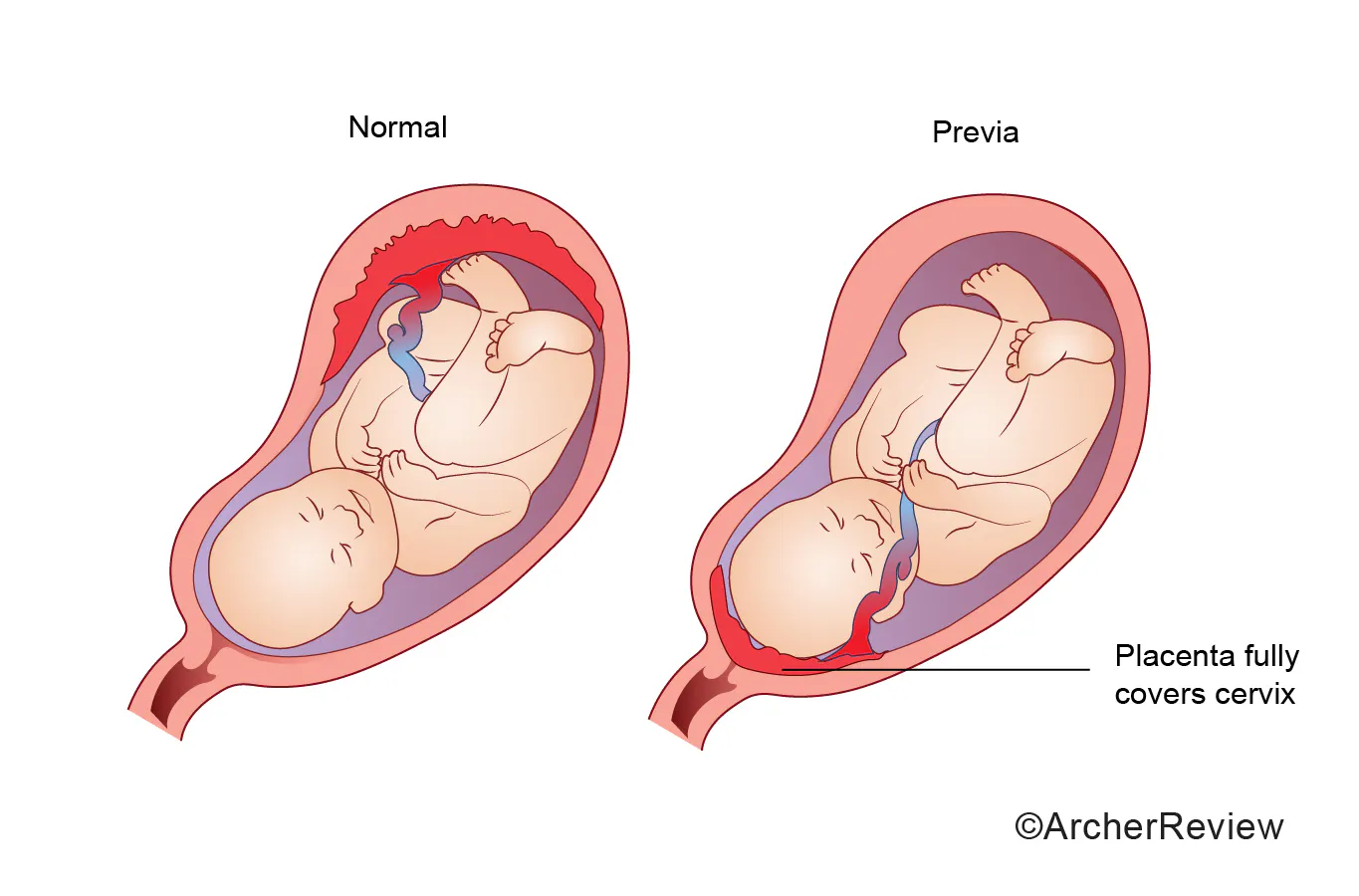
The nurse is caring for a client with suspected placenta previa.
The nurse anticipates an order for which diagnostic test to confirm this finding?
The nurse is caring for a client with suspected placenta previa.
The nurse anticipates an order for which diagnostic test to confirm this finding?
A. Manual cervical exam
[11%]
B. Transvaginal ultrasound
[73%]
C. Contraction stress test
[5%]
D. Nonstress test
[10%]
Statistics
Subject/Lesson
Subject
Maternal & Newborn Health
Lesson
Antepartum
Client Need
Test Plan
Health Promotion and Maintenance
Related Topic
Ante/Intra/Postpartum and Newborn Care
Item Type
Item Type
Knowledge/Comprehension
Explanation
Choice B is correct. A transvaginal ultrasound is a gold standard in diagnosing placenta previa. A transvaginal ultrasound is more accurate than a transabdominal ultrasound in determining the location of the placenta. Please recognize that the vaginal ultrasound probe can safely be inserted a few inches from the cervix to capture the placenta alteration. Any advancement of the probe into the cervix could cause bleeding. However, if done according to the recommendations, the appropriate angle between the cervix and the vaginal ultrasound probe prevents the probe from accidentally moving into the cervical canal.
Choice A is incorrect. A manual cervical examination is contraindicated in placenta previa because this may trigger bleeding. A manual cervical exam attempts to invade the cervical canal directly, whereas a transvaginal ultrasound probe is inserted away from the cervix.
Choice C is incorrect. While placenta previa is not an absolute contraindication for a contraction stress test, it raises the risk of bleeding.
Choice D is incorrect. A nonstress test is safe and often performed for individuals with placenta previa. However, this test does not confirm placenta previa; instead, it evaluates fetal wellbeing.
Learning Objective
Recognize that a transvaginal ultrasound is an accurate and safe test in diagnosing placenta previa.
Related Videos
2 Key Topics
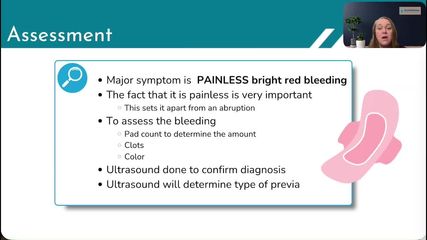
Placenta Previa
30.4 Intrapartum Complications
Additional Info