The nurse is triaging phone calls at a local obstetrics clinic. Which client situation requires immediate follow-up? A client reporting
The nurse is triaging phone calls at a local obstetrics clinic. Which client situation requires immediate follow-up? A client reporting
A. ten fetal movements in the past hour.
[4%]
B. irregular, painful contractions that are decreased with repositioning.
[3%]
C. abdominal cramping following her amniocentesis six hours ago.
[15%]
D. epigastric pain and a frontal headache not relieved with acetaminophen.
[77%]
Statistics
Subject/Lesson
Subject
Maternal & Newborn Health
Lesson
Antepartum
Client Need
Test Plan
Health Promotion and Maintenance
Related Topic
Ante/Intra/Postpartum and Newborn Care
Item Type
Item Type
Analysis
Explanation
Choice D is correct. These symptoms are strongly suggestive of severe pre-eclampsia. Severe pre-eclampsia manifests as epigastric to right-upper quadrant pain suggestive of a liver injury. This, combined with a frontal headache, is highly concerning for severe pre-eclampsia. The client needs to be immediately evaluated as these symptoms may worsen to an eclamptic seizure.
Choice A, B, and C are incorrect. A decrease in fetal movements is only concerning if the fetal movements are less than ten in two consecutive hours. Irregular, painful contractions that are decreased with repositioning is false labor, also known as Braxton-hick contractions. This does not require follow-up; the client should be instructed to hydrate and rest. Abdominal cramping that occurs less than 24 hours from the amniocentesis is normal and does not require follow-up.
Related Videos
2 Key Topics

Preeclampsia
28.5 Infection & Complication Risks
Additional Info
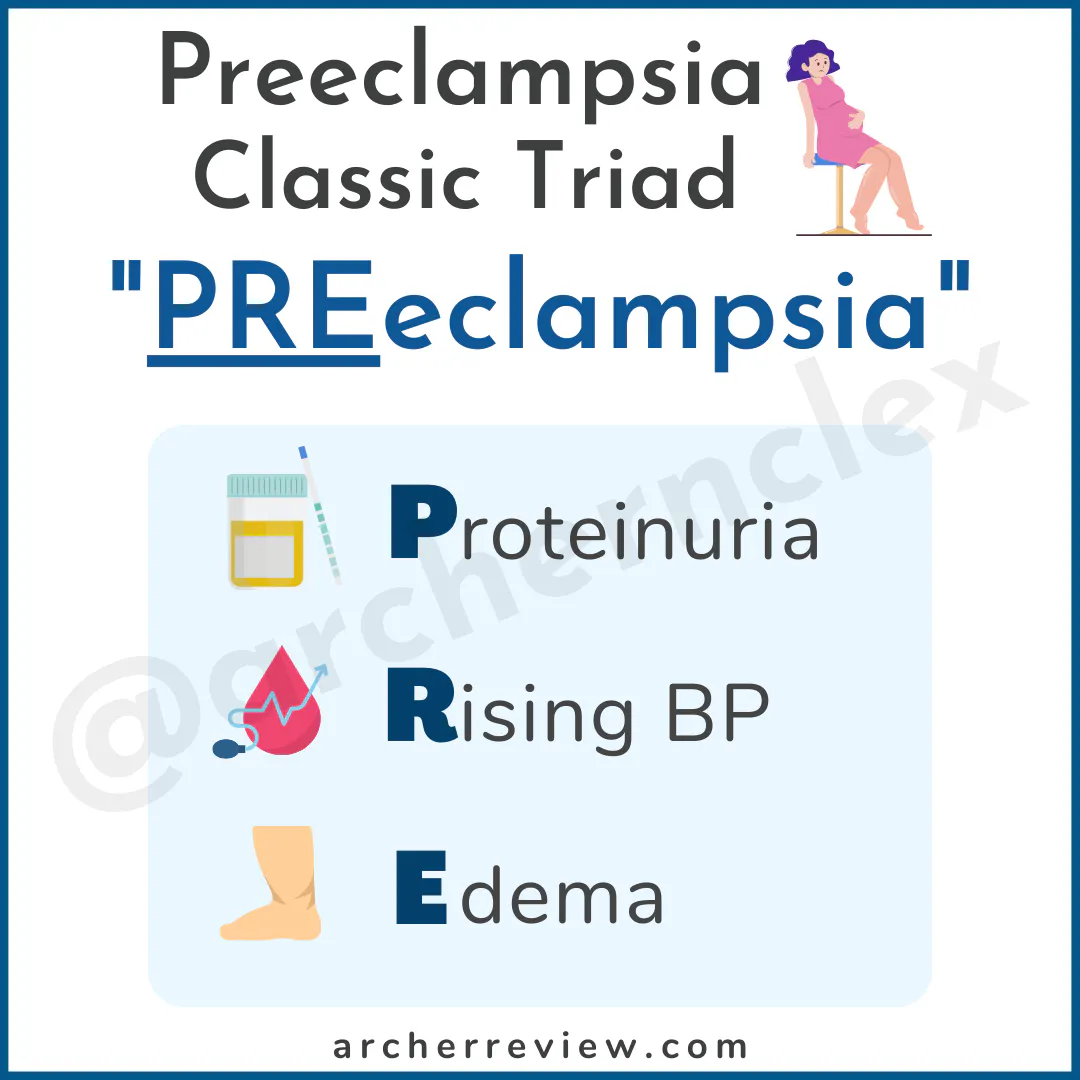
✓ Preeclampsia is hypertension (systolic blood pressure ≥140 mm Hg or diastolic ≥90 mm Hg) occurring after 20 weeks of pregnancy in women with previously normal blood pressure, usually accompanied by proteinuria.
✓ The client with preeclampsia should be instructed to check her blood pressure and report symptoms that suggest worsening preeclampsia, such as visual disturbance, severe headache, or epigastric pain.
✓ Symptoms that suggest a fetal compromise, such as reduced fetal movement, also should be taught.
