The nurse caring for a client who presented to the clinic stating that her home pregnancy test was positive.
The nurse recognizes that this is a
The nurse caring for a client who presented to the clinic stating that her home pregnancy test was positive.
The nurse recognizes that this is a
A. positive sign of pregnancy.
[7%]
B. presumptive sign of pregnancy.
[34%]
C. confirmatory sign of pregnancy.
[10%]
D. probable sign of pregnancy.
[49%]
Statistics
Subject/Lesson
Subject
Maternal & Newborn Health
Lesson
Antepartum
Client Need
Test Plan
Health Promotion and Maintenance
Related Topic
Ante/Intra/Postpartum and Newborn Care
Item Type
Item Type
Knowledge/Comprehension
Explanation
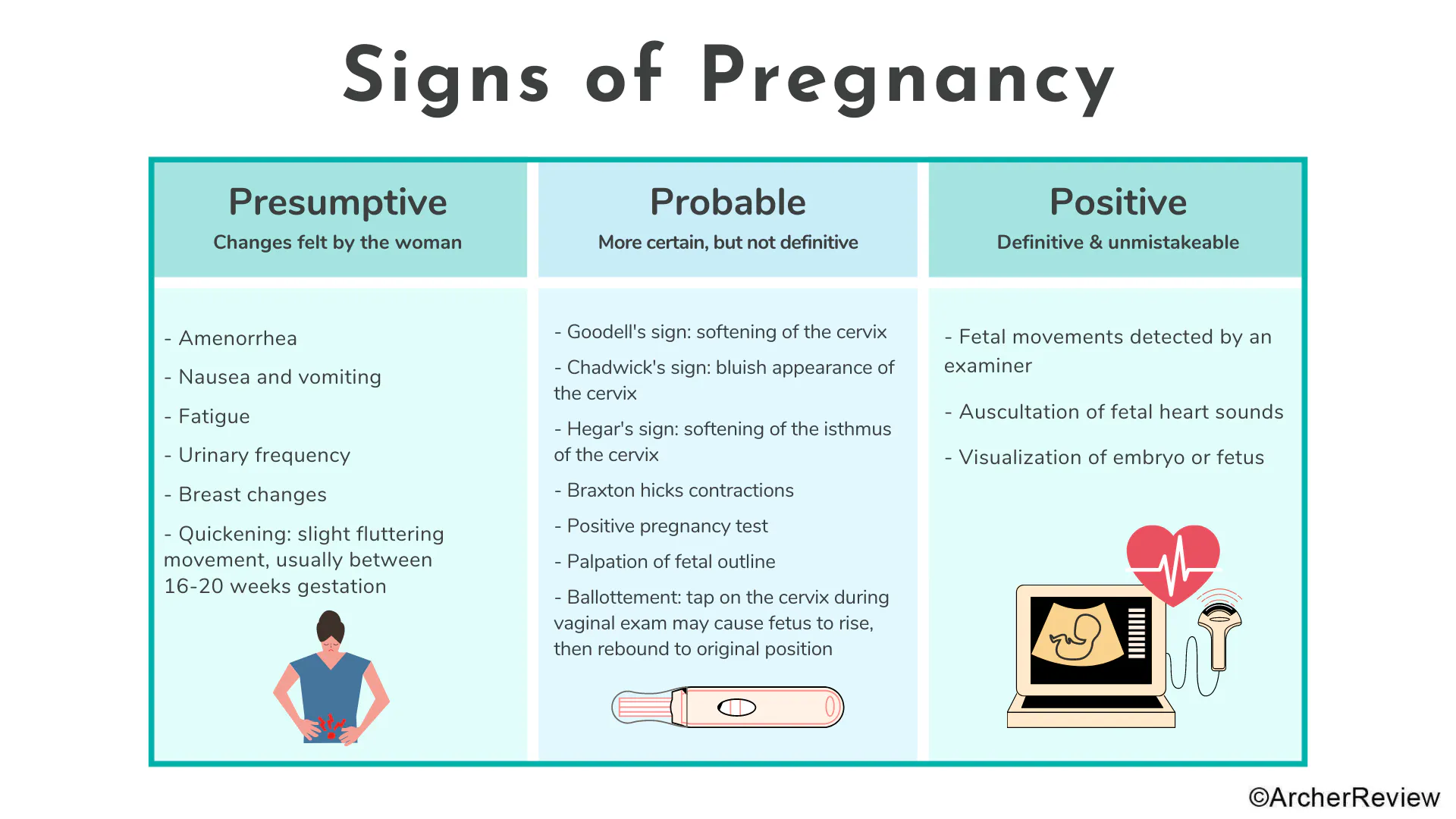
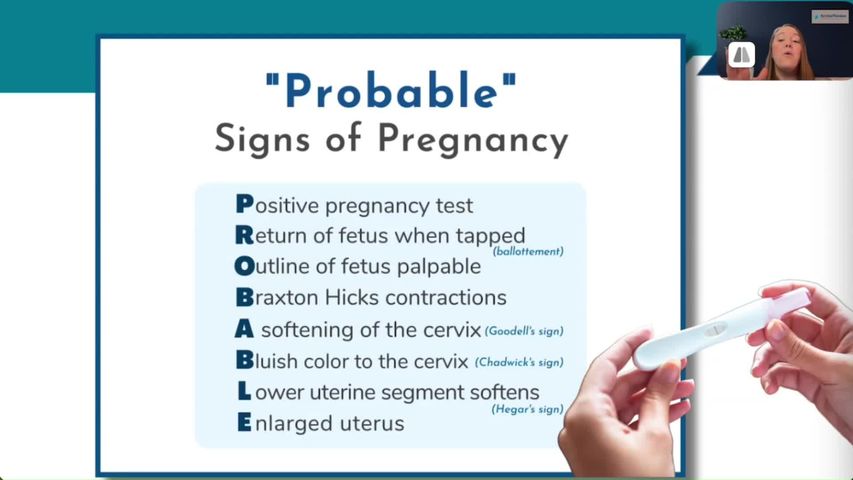
Choice D is correct. A pregnancy test (urine or serum) is a probable sign of pregnancy. Elevated HCG levels may be caused by other reasons such as ectopic pregnancy, user error, or recent abortion/miscarriage.
Choice A is incorrect. Positive signs of pregnancy include visualization of the embryo or fetus via ultrasound, fetal movements detected by the examiner, or auscultation of fetal heart sounds.
Choice B is incorrect. Presumptive signs are subjective signs reported by the client and may indicate pregnancy but can also be associated with other conditions. Frequent urination and nausea are examples of presumptive signs.
Choice C is incorrect. Signs of pregnancy are divided into presumptive, probable, and positive. A positive pregnancy test is regarded as a probable sign of pregnancy. A confirmed pregnancy is done via fetal heart tones or visualization through ultrasound.
Related Videos
2 Key Topics
Signs of Pregnancy
28.1 Pregnancy Basics & Early Assessment
Additional Info
✓ Presumptive signs of pregnancy
- Amenorrhea
- Nausea and vomiting
- Fatigue
- Urinary frequency
- Quickening (slight fluttering movement, usually between 16-20 weeks gestation)
✓ Probable signs of pregnancy
- Goodell's sign (softening of the cervix)
- Chadwick's sign (bluish appearance of the cervix)
- Hegar's sign (softening of the isthmus of the cervix)
- Ballottement (sudden tap on the cervix during the vaginal examination may cause the fetus to rise in the amniotic fluid and then rebound to its original position)
- Braxton hicks contractions
- Positive pregnancy test
- Palpation of fetal outline
✓ Positive signs of pregnancy
- Fetal movements detected by an examiner
- Auscultation of fetal heart sounds
- Visualization of embryo or fetus