The nurse is teaching a client about a scheduled contraction stress test (CST).
Which of the following statements should the nurse include?
The nurse is teaching a client about a scheduled contraction stress test (CST).
Which of the following statements should the nurse include?
A. “You will need to consume a liquid with 50 grams of glucose.”
[7%]
B. “You may need to stimulate your nipples during this test.”
[39%]
C. “A positive result means your baby has had no late decelerations.”
[32%]
D. “A negative result means your baby has had variable decelerations.”
[22%]
Statistics
Subject/Lesson
Subject
Maternal & Newborn Health
Lesson
Antepartum
Client Need
Test Plan
Health Promotion and Maintenance
Related Topic
Ante/Intra/Postpartum and Newborn Care
Item Type
Item Type
Application
Explanation
Choice B is correct. A CST is indicated for high-risk clients who are in the third trimester. CST requires the client to have contractions either through oxytocin administration or nipple stimulation.
Choice A is incorrect. This statement is not accurate in the context of a Contraction Stress Test (CST). The instruction to consume a liquid with 50 grams of glucose is more relevant to a Glucose Challenge Test (GCT) or Glucose Tolerance Test (GTT), which are screening tests for gestational diabetes.
Choice C is incorrect. A positive result in a CST indicates the presence of late decelerations during contractions, which can be a concerning sign of potential fetal distress. This statement is inaccurate.
Choice D is incorrect. A negative result in a CST indicates that there were no significant late decelerations during contractions and not variable decelerations. This statement is not accurate.
Learning Objective
Understand that contractions during a contraction stress test can be induced by intravenous administration of oxytocin or by nipple stimulation.
Related Videos
3 Key Topics
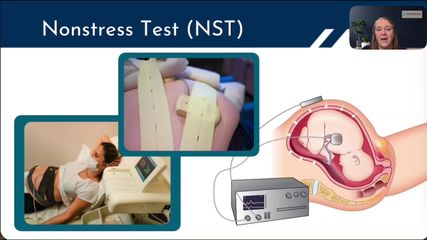
Contraction Stress Test
29.3 Fetal Assessment Tests
Additional Info
Source: Archer Review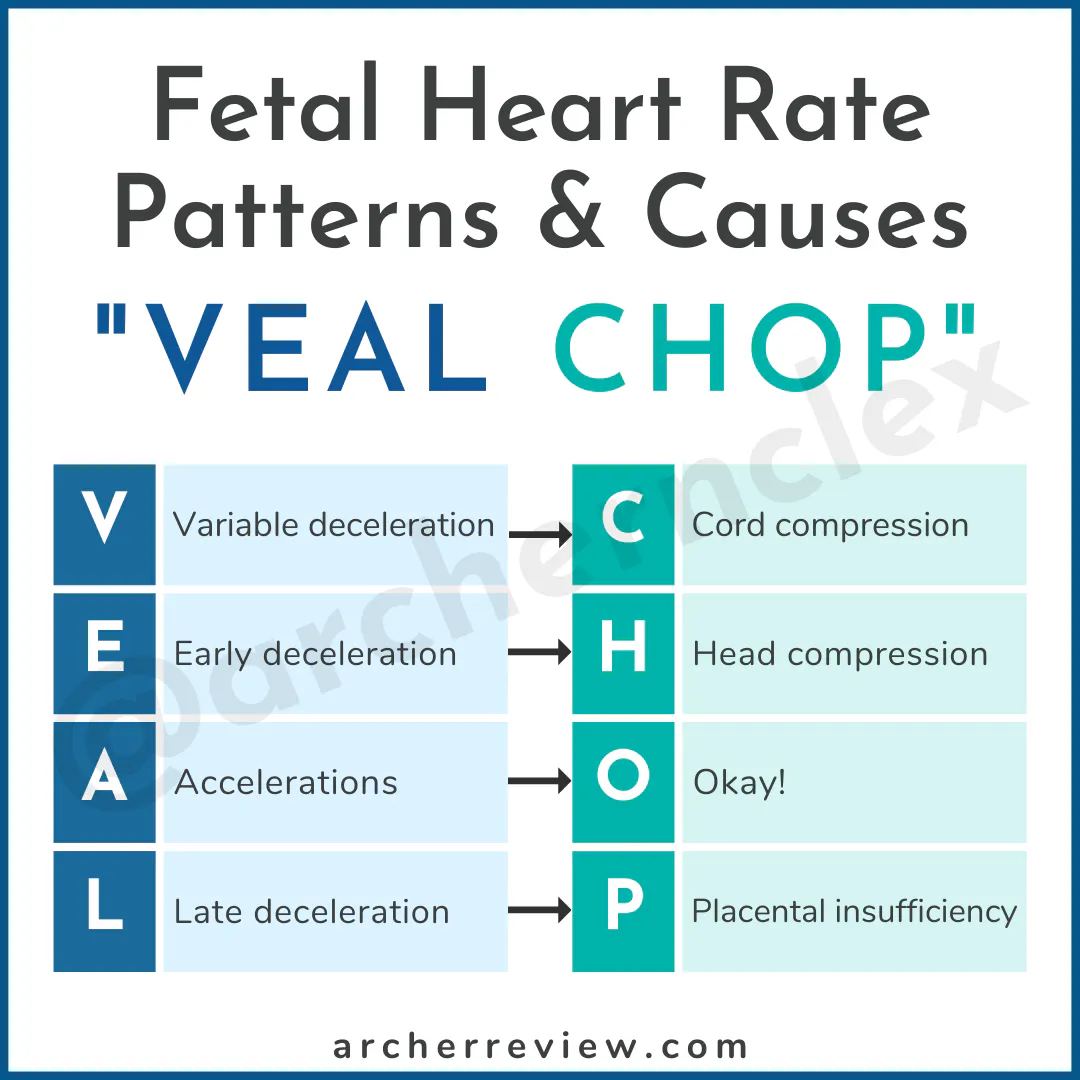 Source : Source: Archer Review
✓ The results for a CST are interpreted as follows –
- Positive (abnormal) indicates that late decelerations were present in the FHR in more than 50% of the contractions.
- Negative (normal) indicates that no late or variable decelerations were evident during the contractions.
✓ A contraction stress test is indicated for clients with high-risk pregnancies. This test is completed in the third trimester.
✓ Relative contraindications to a CST include placenta previa and clients at risk for preterm delivery as this test may hasten delivery or at least cause rupture of the membranes.
