The nurse is assessing a pregnant client who reports difficulty with mobility.
Which pregnancy-related spinal change is likely affecting the client's mobility?
The nurse is assessing a pregnant client who reports difficulty with mobility.
Which pregnancy-related spinal change is likely affecting the client's mobility?
A. Ankylosing spondylosis
[16%]
B. Lordosis
[62%]
C. Scoliosis
[10%]
D. Kyphosis
[12%]
Statistics
Subject/Lesson
Subject
Maternal & Newborn Health
Lesson
Antepartum
Client Need
Test Plan
Health Promotion and Maintenance
Related Topic
Ante/Intra/Postpartum and Newborn Care
Item Type
Item Type
Knowledge/Comprehension
Explanation
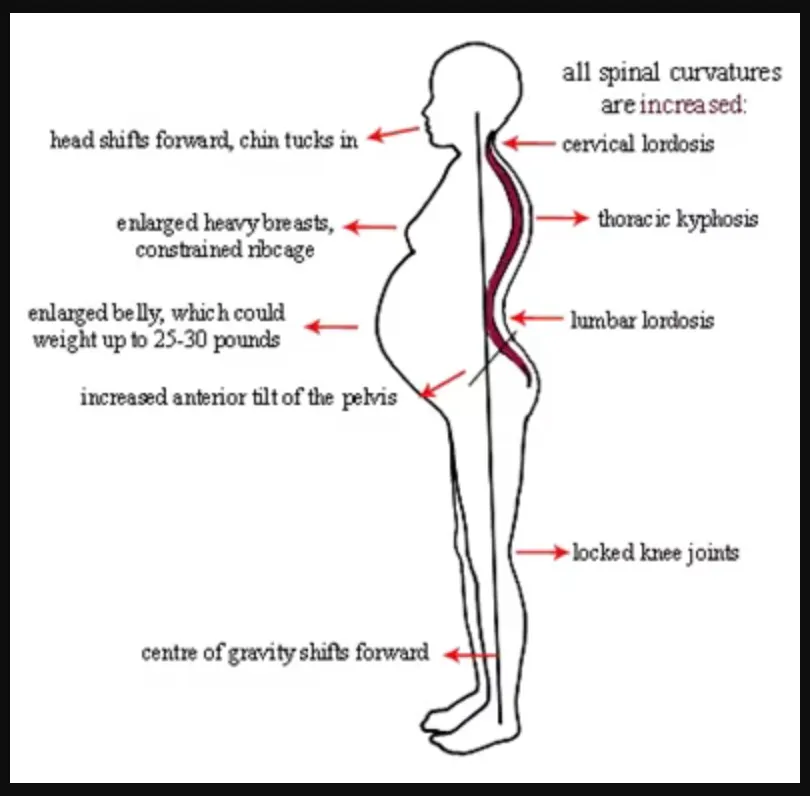
Choice B is correct. The spinal change that is common in pregnancy is lordosis. This results from the increasing weight of the enlarging uterus and the effect of gravity. As a fetus grows, a variety of changes appear in a pregnant woman’s body. The thoracic and lumbar spine curvature change, pain in the lower back, and pelvic region can increase, and the balance and gait pattern also change. Some studies report that the center of gravity of pregnant women moves towards the abdomen, resulting in an increase in lumbar lordosis, posterior tilt of the sacrum, and movement of the head to the back to compensate for the increased weight as the fetus grows.
Choice A is incorrect. Ankylosing spondylosis is a form of arthritis that primarily affects the spine, although other joints can become involved. It causes inflammation of the spinal bones (vertebrae) that can lead to severe, chronic pain, and discomfort.
Choice C is incorrect. Scoliosis is a sideways curvature of the spine that occurs most often during the growth spurt just before puberty.
Choice D is incorrect. Kyphosis is an exaggerated, forward rounding of the back. It can occur at any age but is most common in older women. Age-related kyphosis is often due to weakness in the spinal bones that causes them to compress or crack. Other types of kyphosis can appear in infants or teens due to spine malformation or wedging of the spinal bones over time.
Related Videos
2 Key Topics
Aches & Pains
28.4 Pregnancy Documentation & Physical Changes
Additional Info