The nurse is caring for a client who has a confirmed pregnancy. Using Nägele’s rule, the estimated date of delivery for this client, whose menstrual period was May 5th, will be which date?
The nurse is caring for a client who has a confirmed pregnancy. Using Nägele’s rule, the estimated date of delivery for this client, whose menstrual period was May 5th, will be which date?
A. February 5th
[2%]
B. February 12th
[91%]
C. January 28th
[5%]
D. April 12th
[2%]
Statistics
Subject/Lesson
Subject
Maternal & Newborn Health
Lesson
Antepartum
Client Need
Test Plan
Health Promotion and Maintenance
Related Topic
Ante/Intra/Postpartum and Newborn Care
Item Type
Item Type
Application
Explanation
Choice B is correct. February 12th would be the estimated date of delivery. Subtract three months from May 5th and add seven days equating to February 12th.
Choice A is incorrect. Start with May 5th (LMP). Subtract three months, which brings us to February 5th. This does not follow Nägele’s rule.
Choice C is incorrect. Start with May 5th (LMP). Subtract three months, which brings us to February 5th. Adding seven days to February 5th would lead to February 12th. Therefore, January 28th is not a correct calculation.
Choice D is incorrect. April 12th is not a correct calculation based on Nägele’s rule. It does not follow the process of subtracting three months and adding seven days to the LMP.
Related Videos
2 Key Topics
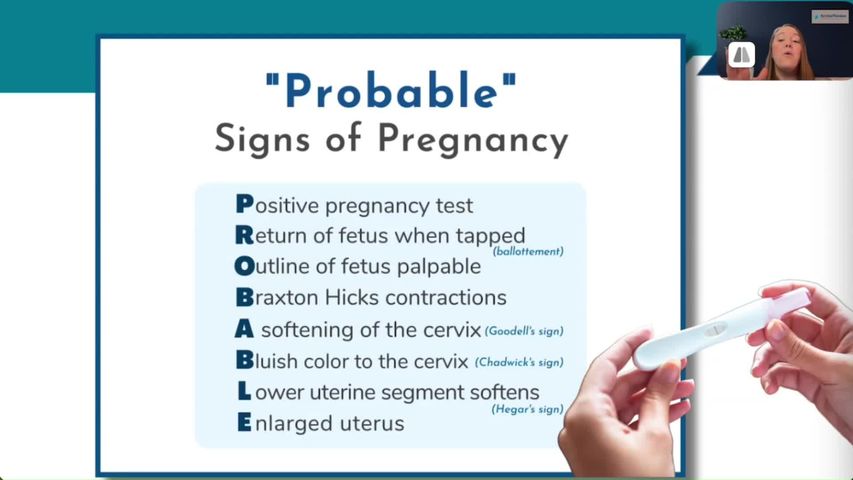
Calculating Due Date
28.1 Pregnancy Basics & Early Assessment
Additional Info
✓ Nägele’s rule involves subtracting three months from the date the last menstrual period began, adding seven days, and then correcting the year, if appropriate.
✓ Nägele’s rule is less accurate when the woman’s menstrual cycle is very irregular.
✓ Ultrasound measurements taken early in pregnancy (before 20 weeks of gestation) can more accurately determine the gestational age.
