The nurse is caring for a pregnant client with placenta previa. While administering oxygen and starting an intravenous infusion, the client becomes anxious and asks the nurse what is happening. The nurse says not to worry and that everything is under control. What is the best description of the nurse's response?
The nurse is caring for a pregnant client with placenta previa. While administering oxygen and starting an intravenous infusion, the client becomes anxious and asks the nurse what is happening. The nurse says not to worry and that everything is under control. What is the best description of the nurse's response?
A. This is an incorrect response, as the health care provider (HCP) should be the one to offer information and assurances.
[6%]
B. This response is inadequate, as the client has the right to understand the type of treatment being received and the reason for the treatment.
[87%]
C. This response is effective, as the reply serves to lower the client's anxiety.
[5%]
D. This response is adequate, as the nurse's actions are routine, follow the orders of the health care provider (HCP), and therefore require no explanation.
[1%]
Statistics
Subject/Lesson
Subject
Maternal & Newborn Health
Lesson
Antepartum
Client Need
Test Plan
Psychosocial Integrity
Related Topic
Therapeutic Communication
Item Type
Item Type
Application
Explanation
Choice B is correct. This response is inadequate, as the client has the right to an accurate and complete explanation about any procedures planned or, in this case, currently being performed. This response by the nurse fails to provide the client with accurate, real-time information.
Choice A is incorrect. One of the rights contained within the American Hospital Association "Client's" Bill of Rights is the following: "The [client] has the right to and is encouraged to obtain from [health care providers] and other direct caregivers relevant, current, and understandable information concerning diagnosis, treatment, and prognosis." Based on this information, nurses are classified as direct caregivers, capable of communicating relevant, current, and understandable information to the client.
Choice C is incorrect. The nurse is responsible for informing a client regarding a procedure that will be performed on them. The nurse is not responsible for obtaining informed consent for a procedure requiring such consent but may be responsible for ensuring that a signed consent form is contained within the client's chart.
Choice D is incorrect. Although the procedures the nurse carries out on the client may be routine work for the nurse, these are not routine procedures that the client undergoes. Therefore, the nurse should thoroughly explain to the client what each procedure is, the purpose of each, and what to expect. Doing so will help to decrease the client's anxiety.
Learning Objective
Recognize that the client has the right to understand the type of treatment being received and the reason for the treatment. A detailed response often alleviates the client's anxiety.
Related Videos
2 Key Topics
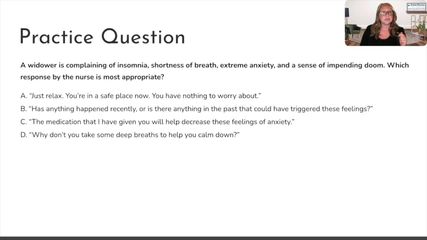
Never Dismiss Feelings
13.10 Therapeutic Communication
Additional Info
✓ The individual responsible for performing the procedure is responsible for obtaining informed consent. In most situations, obtaining a client's informed consent does not fall within the nurse's responsibility.
✓ Apart from the medical aspects, emotional support is crucial. The nurse should actively listen to the client's concerns, acknowledge their feelings, and offer empathetic responses. Sometimes, just knowing that someone is there to support them can alleviate anxiety.
✓ The nurse should provide basic information about placenta previa, explaining what it is and how it's being managed. This can help the client understand the medical situation better and reduce fear stemming from uncertainty.
