The nurse is caring for a client two days post-operative following gastroduodenostomy. After reviewing the clinical data, the nurse should take which action? See the exhibit.
The nurse is caring for a client two days post-operative following gastroduodenostomy. After reviewing the clinical data, the nurse should take which action? See the exhibit.
A. obtain a prescription for an antihypertensive
[21%]
B. determine if the client's pain is being controlled
[55%]
C. assess the client's surgical wound for signs of infection
[17%]
D. notify the physician for concerns of hypovolemic shock
[7%]
Statistics
Subject/Lesson
Subject
Fundamentals
Lesson
Perioperative Care
Client Need
Test Plan
Physiological Adaptation
Related Topic
Alterations in Body Systems
Item Type
Item Type
Analysis
Explanation
Choice B is correct. The client's blood pressure and pulse have steadily increased. Manifestations of poor pain control include sympathetic responses, which cause an increase in blood pressure and pulse. Other nonverbal manifestations include pupil dilation, sweating, guarding of the surgical wound (or affected area), and social withdrawal.
Choice A is incorrect. In the context of the client being postoperative and having increasing blood pressure and pulse, the nurse should determine if the client's pain is controlled because an antihypertensive would mask the client's vital signs, which suggest pain.
Choice C is incorrect. It is too early for the client to demonstrate manifestations of infection. Postoperative infection usually begins at the end of postoperative day three or postoperative day four. This would be an inappropriate assessment, considering the time frame.
Choice D is incorrect. Hypovolemic shock may occur, but the vital signs suggest hypovolemic shock are tachycardia and hypotension. The diastolic blood pressure would temporarily increase in the early stages of shock, and then both would start to trend downward. The client's blood pressure is not trending downward.
Related Videos
2 Key Topics
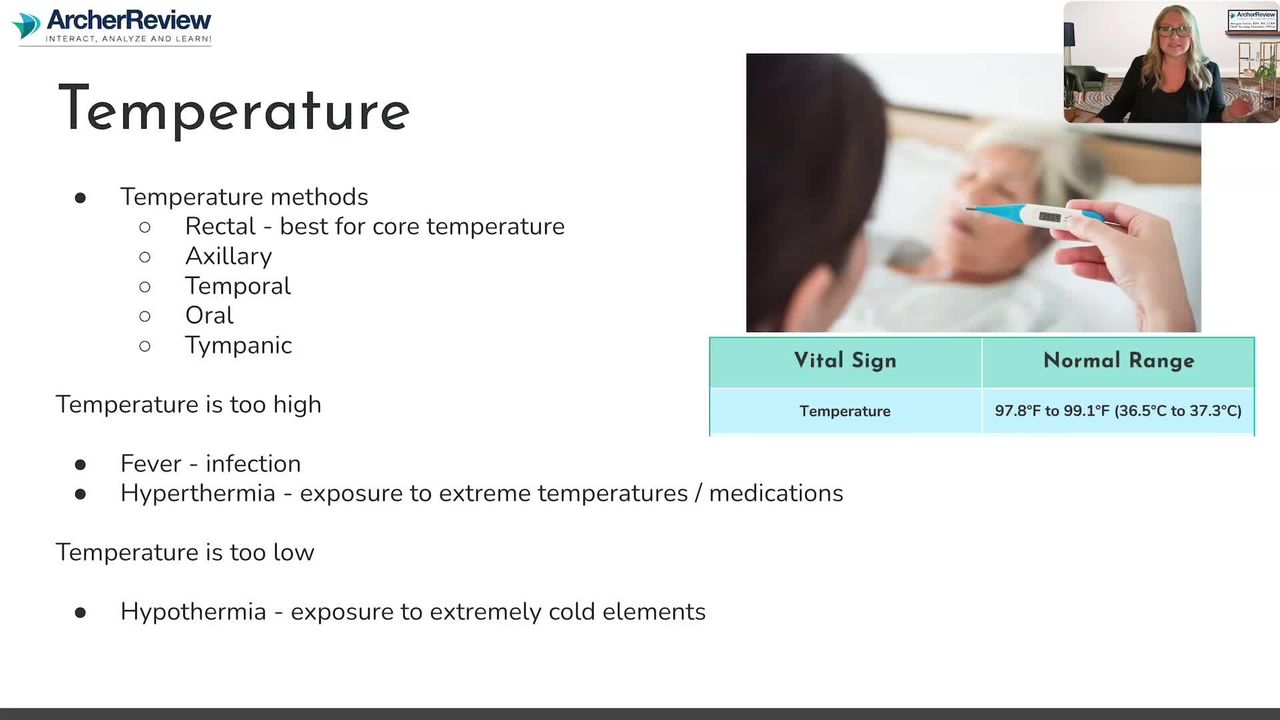
Vital Signs
12.1 Clinical Assessment Overview
Additional Info
✓ Poor pain control may delay postoperative healing as the client's sympathetic nervous system would increase glucose levels, blood pressure, and pulse.
✓ The client may also become withdrawn and resist dressing changes and participating in ambulation or physical therapy.
✓ Self-report is the best tool in assessing a client for pain, but that does not exclude the nurse from assessing for nonverbal indicators.
