The nurse is assessing a client who just returned from surgery. The nurse checks preoperative vital signs at 0830 to compare them with the current vital signs at 1030. What action should the nurse take? See the image below.
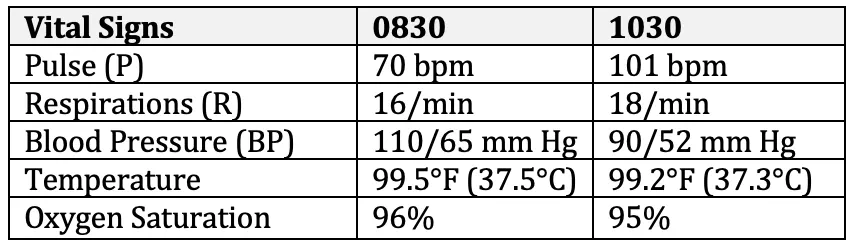
The nurse is assessing a client who just returned from surgery. The nurse checks preoperative vital signs at 0830 to compare them with the current vital signs at 1030. What action should the nurse take? See the image below.
A. Assess the surgical wound
[70%]
B. Collect blood cultures
[5%]
C. Administer oxygen at 2 L/minute
[12%]
D. Encourage by-mouth (PO) fluids
[13%]
Statistics
Subject/Lesson
Subject
Fundamentals
Lesson
Perioperative Care
Client Need
Test Plan
Reduction of Risk Potential
Related Topic
Changes/Abnormalities in Vital Signs
Item Type
Item Type
Analysis
Explanation
Choice A is correct. The client's 10:30 AM vital signs show signs of shock. Considering this client is in the immediate postoperative period, the nurse should assess the surgical wound for signs of hemorrhage. The nurse should reinforce the dressing if this is the source of the bleeding. The nurse should notify the primary healthcare physician (PHCP) of the client's change in condition.
Choices B, C, and D are incorrect. Collecting blood cultures is unnecessary as the likelihood of this being a surgical site infection or sepsis is low. This is because the client is immediately postoperative, and infections typically begin in the extended postoperative period. Oxygen administration is not indicated, as oxygen saturation of 95% is optimal. The nurse should not encourage by-mouth fluids – rather, obtain a prescription for intravenous fluids.
Related Videos
2 Key Topics
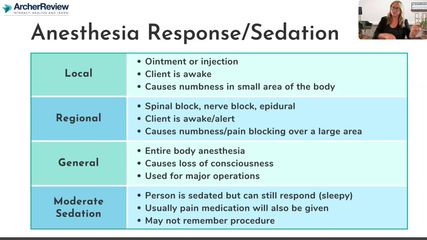
Pre and Post Operative
12.9 Anesthesia & Perioperative Care
Additional Info
✓ Immediately post-operatively, the client will likely experience a fluid volume deficit.
✓ This deficit is likely from the client being NPO preoperatively and losing blood and bodily fluids during the procedure.
✓ The client is at risk for hypovolemic shock if the fluid imbalance is not corrected.
✓ The earliest signs of hypovolemic shock includes tachycardia, restlessness, and altered mental status.
https://app.archerreview.com/test-screen/MjQzMzczNDk=/NjQ4Mw==
