The nurse is caring for a client who has been diagnosed with septic shock. The nurse understands that which of the following is considered a key characteristic of septic shock?
The nurse is caring for a client who has been diagnosed with septic shock. The nurse understands that which of the following is considered a key characteristic of septic shock?
A. Low respiratory rate
[7%]
B. Decreased serum lactate levels
[8%]
C. Elevated serum bicarbonate levels
[8%]
D. Hypotension despite adequate fluid replacement
[77%]
Statistics
Subject/Lesson
Subject
Critical Care
Lesson
Critical Care Concepts
Client Need
Test Plan
Physiological Adaptation
Related Topic
Alterations in Body Systems
Item Type
Item Type
Knowledge/Comprehension
Explanation
Choice D is correct. Hypotension is a hallmark feature of septic shock, and despite receiving intravenous fluids, the blood pressure remains low due to widespread vasodilation and reduced vascular tone.
Choice A is incorrect. Septic shock is associated with increased rather than decreased respiratory rate as the body tries to compensate for inadequate tissue perfusion and oxygenation.
Choice B is incorrect. Septic shock is characterized by elevated serum lactate levels, not decreased levels. Elevated lactate levels indicate tissue hypoperfusion and anaerobic metabolism.
Choice C is incorrect. Septic shock is associated with metabolic acidosis, which would result in decreased serum bicarbonate levels, not elevated levels.
Related Videos
2 Key Topics
Distributive Shock
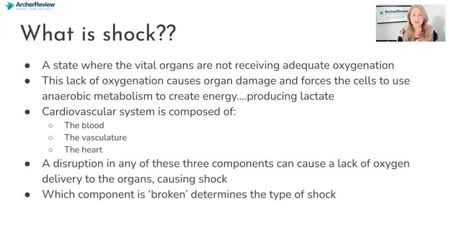
27.5 Shock
Additional Info
✓ Nurses must promptly assess clients with suspected septic shock and initiate appropriate interventions. Early recognition and intervention are vital to prevent further deterioration and improve outcomes. Earlier on in the presentation of sepsis, clients present with the following vital sign changes:
- Fever, temperature higher than 38 C, or hypothermia, temperature lower than 36 C
- Tachycardia with a heart rate higher than 90 beats per minute in adult patients or less than two standard deviations for age in pediatric patients
- Tachypnea with respiratory rate greater than 20 breaths per minute in adult patients or more than two standard deviations for age in pediatric patients
✓ If hypotension persists despite adequate fluid resuscitation, vasopressor medications may be required to support blood pressure and maintain adequate perfusion to vital organs. Nurses should carefully monitor the client's hemodynamic response and titrate vasopressor dosages as needed.
✓ Continuous monitoring of vital signs, including blood pressure, heart rate, respiratory rate, and oxygen saturation, is crucial in septic shock. Early signs of deterioration should be promptly identified to guide interventions and prevent complications.
