The nurse is caring for a client receiving mechanical ventilation. Which interventions are appropriate when caring for a client receiving mechanical ventilation? Select all that apply.
The nurse is caring for a client receiving mechanical ventilation. Which interventions are appropriate when caring for a client receiving mechanical ventilation? Select all that apply.
Statistics
Subject/Lesson
Subject
Critical Care
Lesson
Critical Care Concepts
Client Need
Test Plan
Reduction of Risk Potential
Related Topic
Potential for Complications of Diagnostic Tests/Treatments/Procedures
Item Type
Item Type
Application
Explanation
Choices A, B, D, E, and F are correct. Regular assessment of breath sounds and chest movement is essential to monitor ventilation effectiveness, detect any changes or complications, and ensure the proper functioning of the mechanical ventilator. Administering prescribed sedatives to clients receiving mechanical ventilation helps to alleviate anxiety, promote comfort, and reduce the risk of complications such as ventilator dyssynchrony. However, the choice and dosage of sedatives should be carefully considered to avoid oversedation. Not all client's sedation requirements will be the same. Clients receiving mechanical ventilation are at risk of developing ventilator-associated pneumonia (VAP). Providing oral care every 2 hours helps maintain oral hygiene, reduce the risk of infection, and prevent complications associated with bacterial colonization in the oral cavity. Collaboration with the respiratory therapist is crucial to optimize mechanical ventilation. They possess expertise in ventilator management, adjustments, and troubleshooting. Working together helps ensure proper ventilation settings and response to changes in the client's condition. Monitoring EtCO2 levels provides valuable information about the client's ventilation status, adequacy of CO2 elimination, and effectiveness of mechanical ventilation. The normal values for EtCO2 vary depending on the measurement method and the client's condition but generally fall within the range of 35 to 45 mmHg. High EtCO2 levels, known as hypercapnia or hypercarbia, may indicate this, such as airway obstruction or respiratory depression. Low EtCO2 levels, also known as hypocapnia or hypocarbia, may indicate hyperventilation or hypoperfusion.
Choice C is incorrect. When caring for clients receiving mechanical ventilation, maintaining the client in a supine position would not be appropriate. In these types of clients, the supine position can potentially worsen ventilation-perfusion mismatching, leading to decreased oxygenation and increased work of breathing. The nurse must also be aware of other complications, such as skin breakdown, which can occur from having a client in a certain position for too long. With that in mind, the client should be repositioned every 2 hours and, when needed, with the head of the bed being elevated between 30 to 45 degrees to help prevent ventilator associate pneumonia (VAP). Remember, there may be contraindications to these interventions, and each client's care should be tailored to their needs.
Related Videos
5 Key Topics
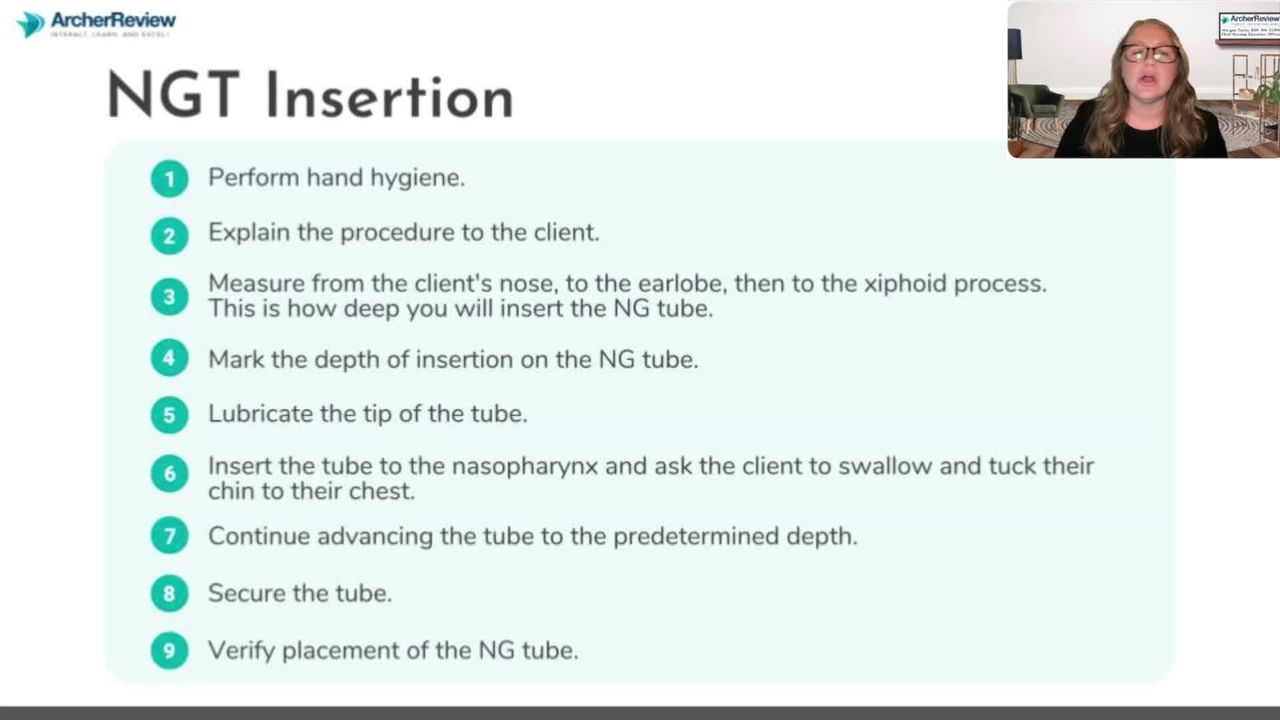
Endotracheal Tube
4.1 Enteral & Airway Tubes
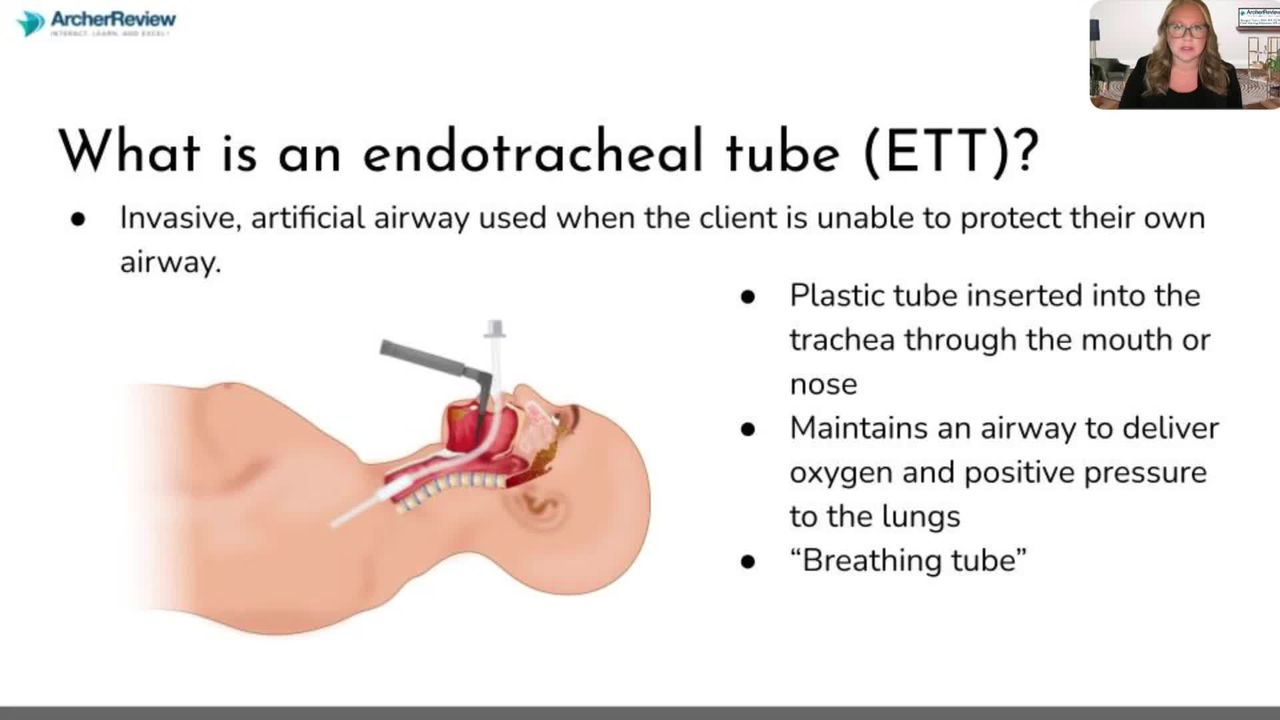
Endotracheal Tubes
27.1 Critical Care Respiratory System
Additional Info
✓ Shortening the ventilator time has been shown to reduce ventilation-related complications like pneumonia, so actively pursuing liberation from mechanical ventilation is imperative in every ventilated client.
✓ A sedation holiday should be done daily to assess readiness for extubation. If appropriate, this may not be possible for all clients.
✓ It's important to remember why the client is using the ventilator so your management efforts can focus on correcting the causes of the respiratory failure as well as the management of the ventilator.
