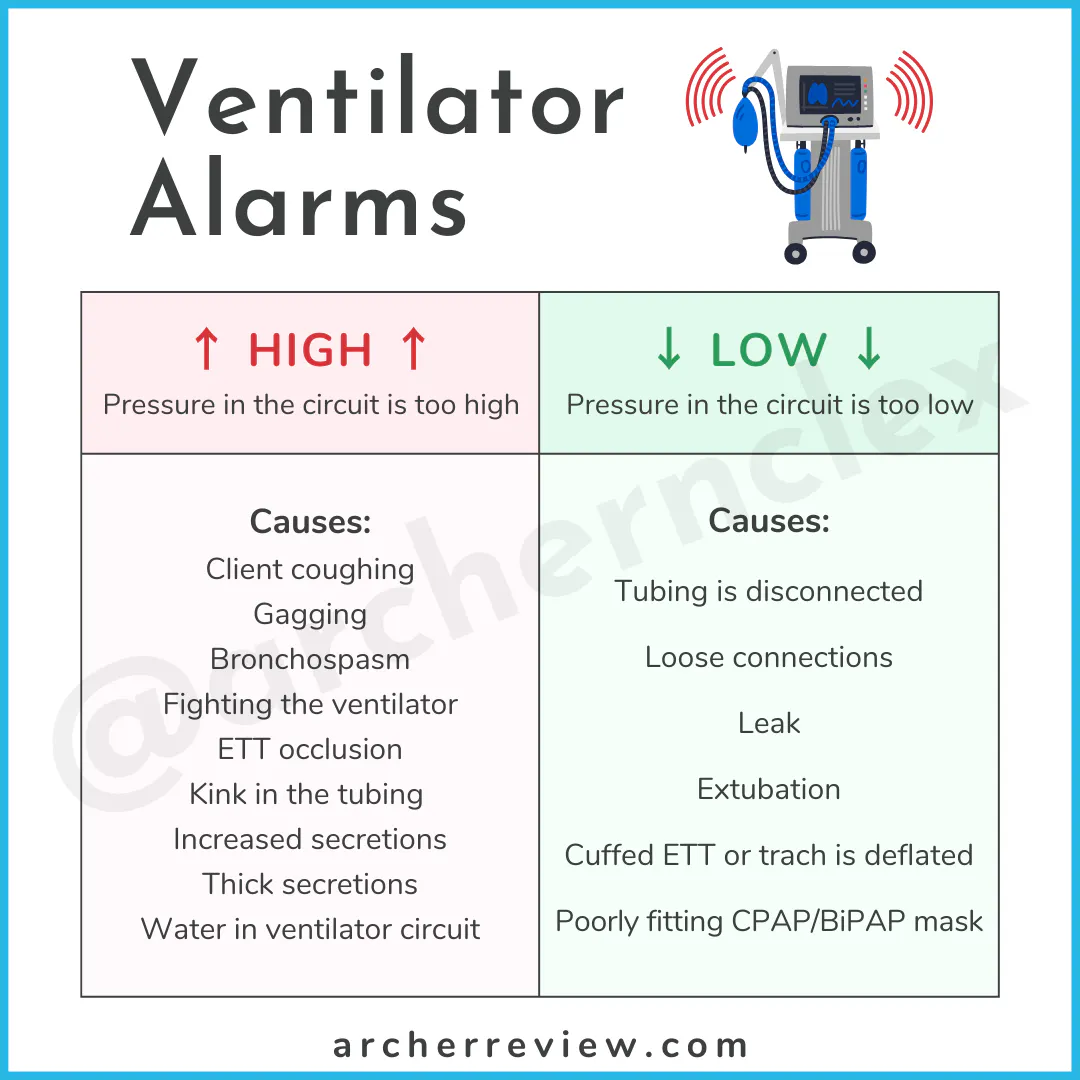
The nurse is planning a staff development conference about mechanical ventilator modes. Which of the following information should the nurse include?
The nurse is planning a staff development conference about mechanical ventilator modes. Which of the following information should the nurse include?
A. Assist-control allows spontaneous breathing at the client's rate and tidal volume between the ventilator breaths
[22%]
B. Synchronized intermittent mandatory ventilation applies positive airway pressure throughout the respiratory cycle to prevent alveolar collapse
[24%]
C. Pressure support ventilation delivers a set airway pressure and is used for spontaneously breathing clients
[27%]
D. Continuous positive airway pressure is used to provide full ventilator support for clients not taking spontaneous breaths
[27%]
Statistics
Subject/Lesson
Subject
Critical Care
Lesson
Critical Care Concepts
Client Need
Test Plan
Reduction of Risk Potential
Related Topic
Potential for Complications of Diagnostic Tests/Treatments/Procedures
Item Type
Item Type
Analysis
Explanation
Choice C is correct. Pressure support ventilation is used during weaning, providing pressure and positive end-expiratory pressure (PEEP) to spontaneously breathing individuals. This mode does not provide a tidal volume, so the client must be able to spontaneously breathe and take in an adequate tidal volume for this mode.
Choice A is incorrect. Assist-control (AC) provides full ventilation support. A set tidal volume, rate, and FiO2 are added. This differs from synchronized intermittent mandatory ventilation (SIMV), where SIMV will allow clients to take spontaneous breaths between each breath given by the ventilator at their own tidal volume.
Choice B is incorrect. SIMV does not apply positive airway pressure throughout the respiratory cycle to prevent collapse; this description belongs to continuous positive airway pressure (CPAP), a weaning mode.
Choice D is incorrect. CPAP does not provide ventilator support as it is used primarily as a weaning mode to get the client extubated.
Related Videos
2 Key Topics
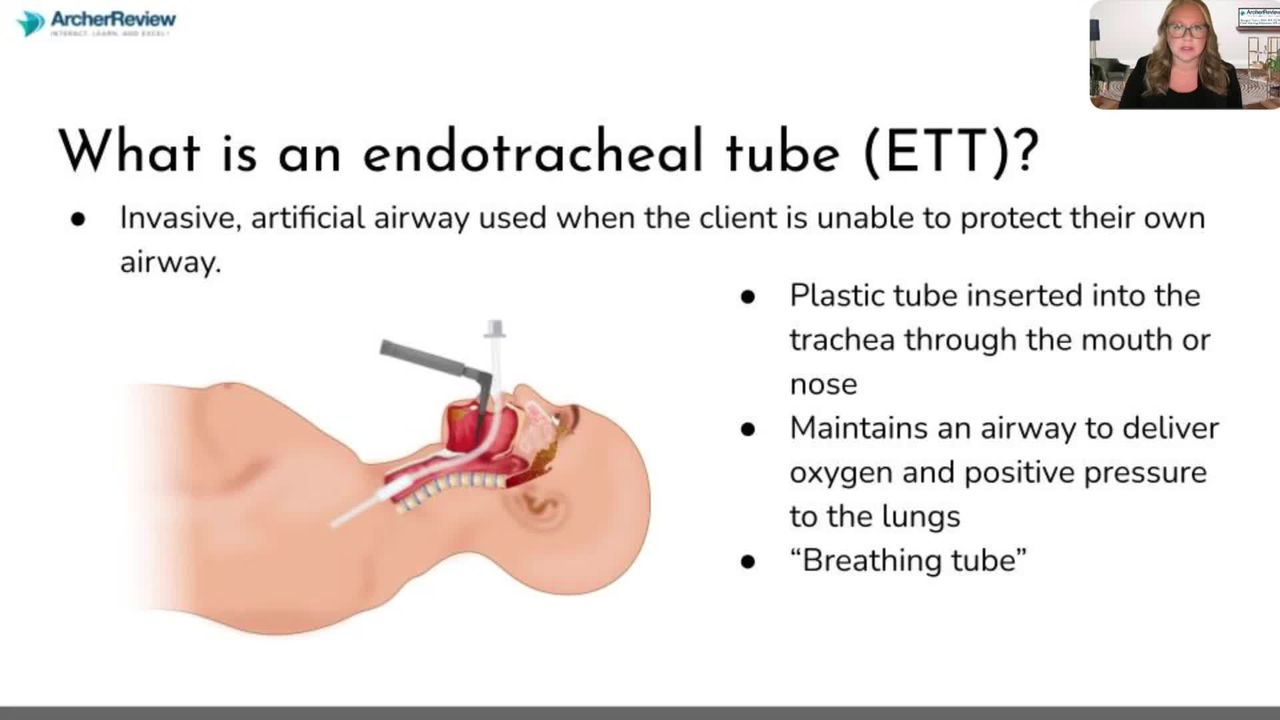
Ventilators- Critical Care
27.1 Critical Care Respiratory System
Additional Info
✓ When caring for a client on a ventilator, you should be familiar with the following settings:
- Mode (Volume [SIMV, A/C] or Pressure [PSV])
- Rate (Number of breaths per minute)
- Tidal volume (the amount of gas delivered to the client)
- Fraction of inspired oxygen (FiO2 - the percentage of oxygen given per breath)
- PEEP (pressure added at exhalation to keep the small airways open and mitigate atelectasis)
- Pressure support (PS - provides added pressure when the client takes a spontaneous breath)