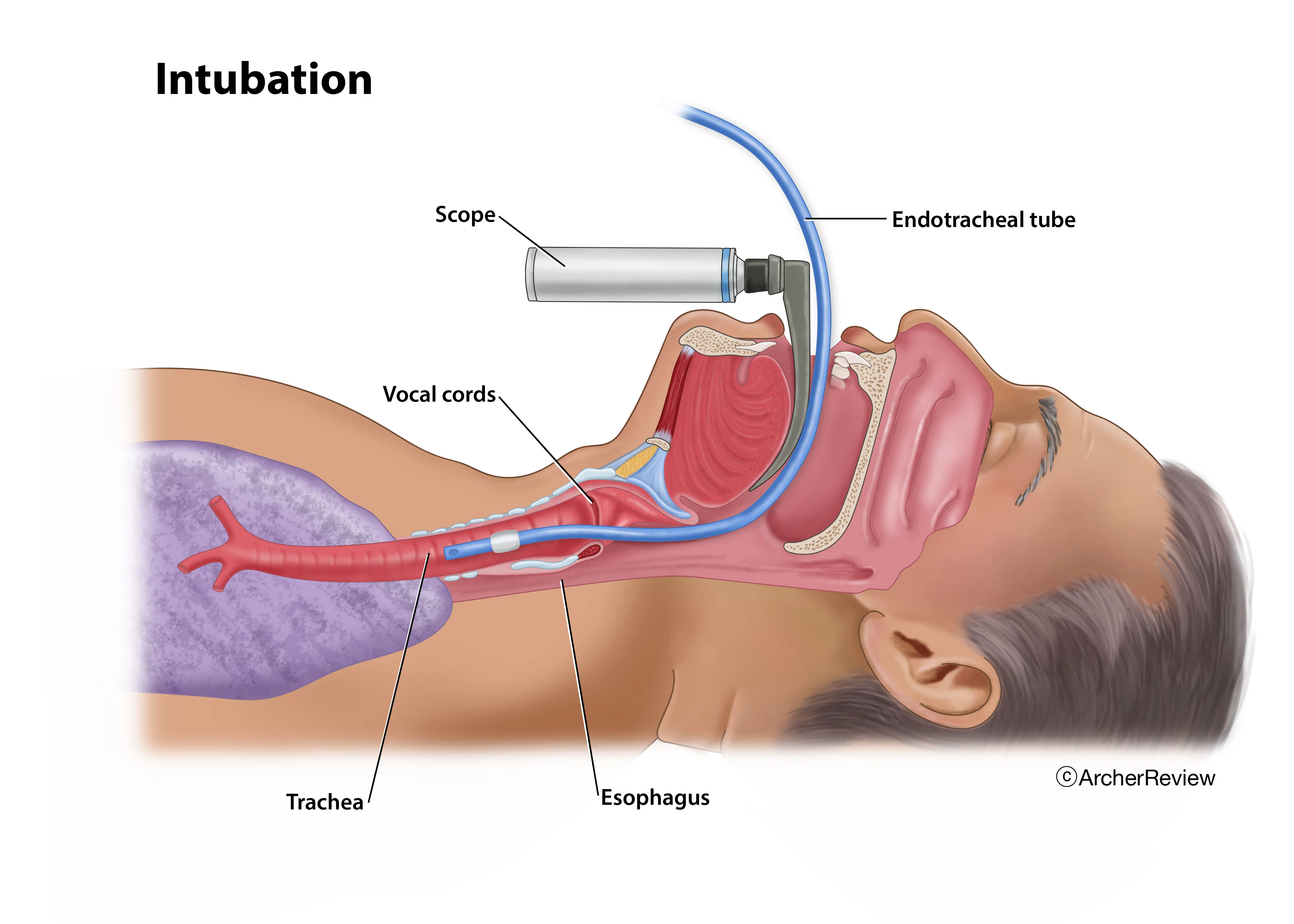
The nurse is caring for a client who sustained multiple rib fractures in a motor vehicle collision. The client is assessed as drowsy, has shallow respirations, and oxygen saturation is 85% on a non-rebreather mask.
The nurse should prioritize
The nurse is caring for a client who sustained multiple rib fractures in a motor vehicle collision. The client is assessed as drowsy, has shallow respirations, and oxygen saturation is 85% on a non-rebreather mask.
The nurse should prioritize
A. encouraging the client to use the incentive spirometer.
[1%]
B. obtaining an order for a chest radiograph (x-ray).
[6%]
C. elevating the head of the bed to 90 degrees.
[14%]
D. preparing the client for endotracheal intubation.
[79%]
Statistics
Subject/Lesson
Subject
Critical Care
Lesson
Critical Care Concepts
Client Need
Test Plan
Physiological Adaptation
Related Topic
Medical Emergencies
Item Type
Item Type
Application
Explanation
Choice D is correct. This client is exhibiting signs of acute respiratory failure—drowsiness, shallow breathing, and critically low oxygen saturation (85%) despite high-flow oxygen via a non-rebreather mask. These findings indicate impending respiratory arrest. The priority is to secure the airway and support ventilation.
Choice A is incorrect. This intervention promotes lung expansion but is inappropriate in a drowsy, hypoxic client who cannot follow commands or perform deep breathing. It is not safe or effective in this acute setting.
Choice B is incorrect. While a chest x-ray may be needed to evaluate complications like pneumothorax or hemothorax, diagnostic delays can worsen hypoxia. It is not a priority over securing the airway.
Choice C is incorrect. Positioning the client upright may assist with lung expansion and modestly enhance ventilation in some respiratory conditions. However, this client is already receiving maximal oxygen via a non-rebreather mask and remains hypoxic (SpO₂ 85%). This suggests imminent respiratory failure despite noninvasive oxygenation, indicating that positional adjustments are inadequate and too late. The client’s shallow respirations and declining level of consciousness (drowsiness) further reflect alveolar hypoventilation and impaired gas exchange — cues that mechanical ventilatory support is now required.
Related Videos
2 Key Topics
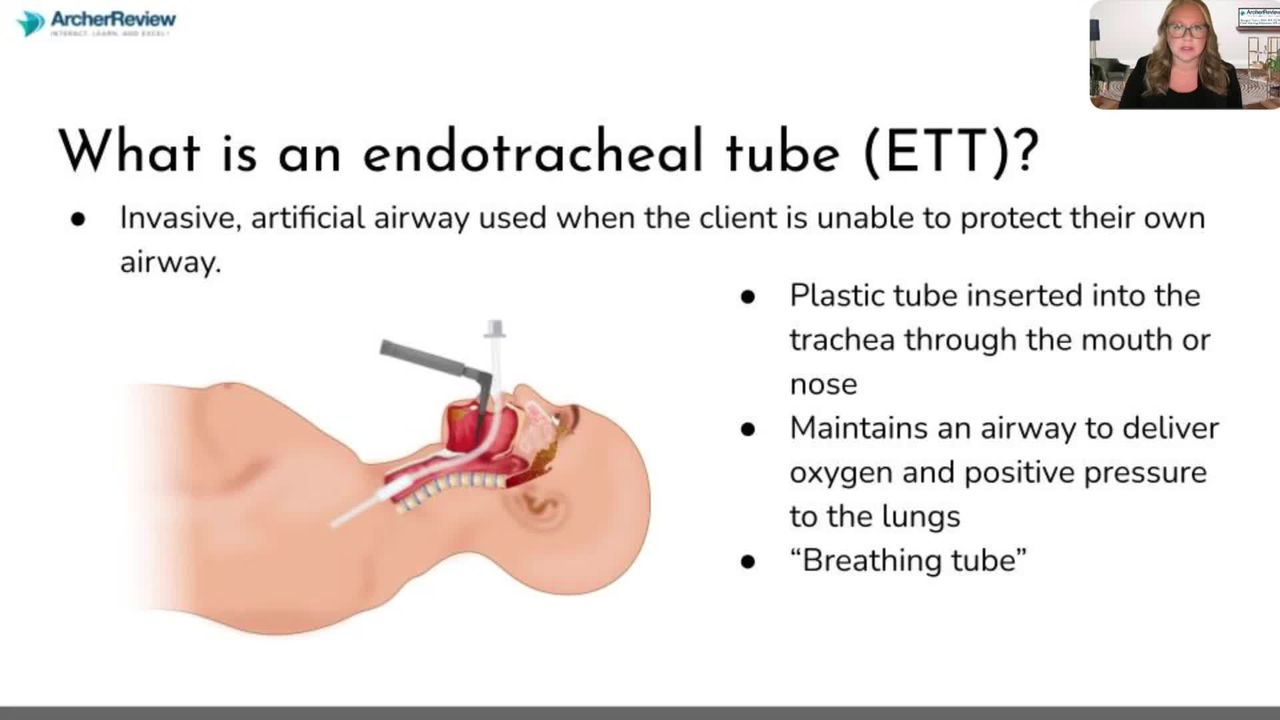
Endotracheal Tubes