The nurse is caring for a client receiving mechanical ventilation via endotracheal (ET) tube.
Which action by the nurse would prevent the client from getting ventilator-acquired pneumonia (VAP)?
The nurse is caring for a client receiving mechanical ventilation via endotracheal (ET) tube.
Which action by the nurse would prevent the client from getting ventilator-acquired pneumonia (VAP)?
A. Handwashing before suctioning
[37%]
B. Positioning the client prone
[4%]
C. Ensuring that the ventilator alarms are always enabled
[4%]
D. Performing oral care daily
[54%]
Statistics
Subject/Lesson
Subject
Critical Care
Lesson
Critical Care Concepts
Client Need
Test Plan
Reduction of Risk Potential
Related Topic
Potential for Complications of Diagnostic Tests/Treatments/Procedures
Item Type
Item Type
Application
Explanation
Choice A is correct. This is the most effective intervention to prevent the introduction of pathogens into the airway. Suctioning introduces direct access to the lower respiratory tract, so rigorous hand hygiene just before suctioning is critical. This directly interrupts the transmission of pathogens and aligns with CDC and VAP bundle guidelines.
Choice B is incorrect. While prone positioning may improve oxygenation in severe ARDS, it does not reduce the risk of VAP and is not part of standard VAP prevention measures.
Choice C is incorrect. Ensuring alarms are functional promotes safety but does not prevent infection. This action is essential for mechanical safety, but is indirectly related at best to pneumonia prevention.
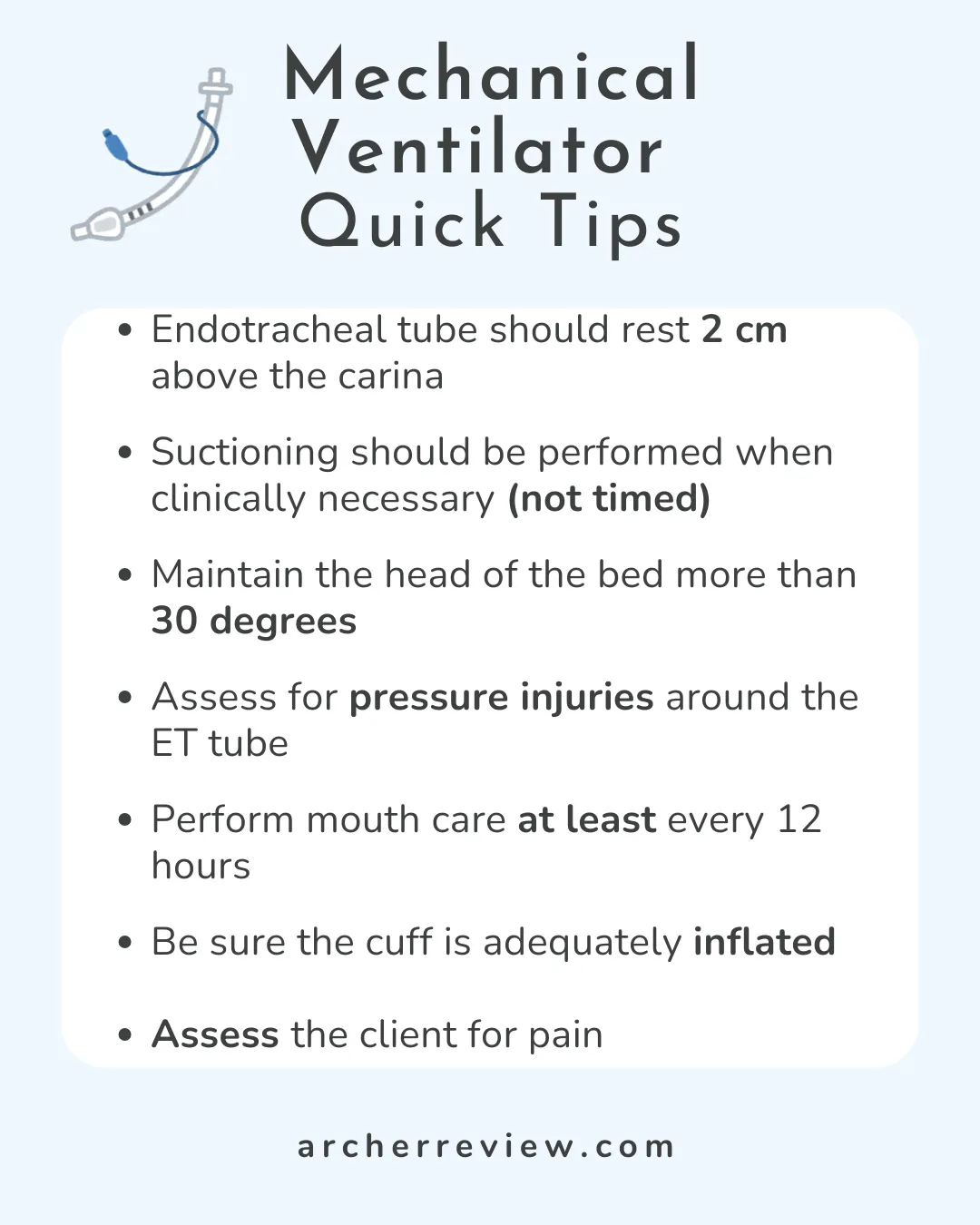
Choice D is incorrect. Oral care daily for VAP prevention is insufficient. Oral care for VAP prevention involves brushing teeth with a suction toothbrush at least every 12 hours and using an antimicrobial rinse.
Related Videos
2 Key Topics
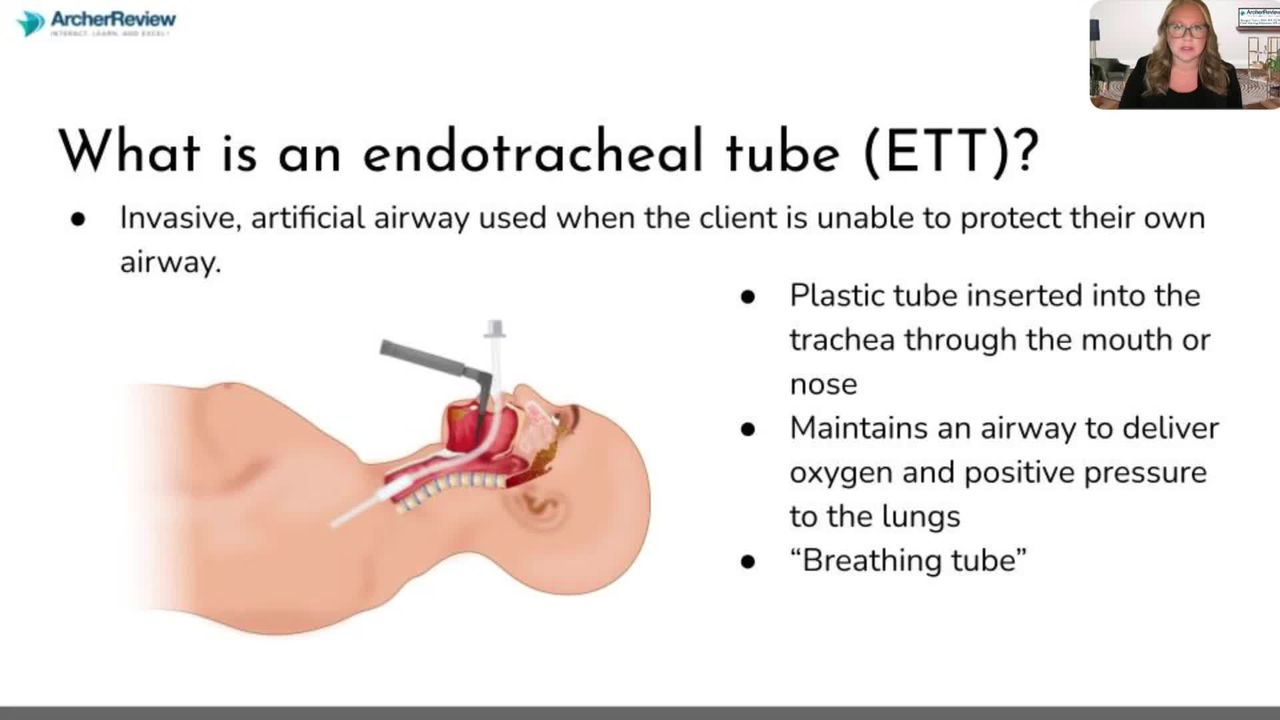
Endotracheal Tubes
27.1 Critical Care Respiratory System
Additional Info