The nurse is caring for a client who is receiving mechanical ventilation.
It would indicate a correct understanding of managing a client on a ventilator if the nurse
The nurse is caring for a client who is receiving mechanical ventilation.
It would indicate a correct understanding of managing a client on a ventilator if the nurse
A. instills normal saline into the endotracheal (ET) tube prior to suctioning.
[14%]
B. verifies that the endotracheal tube tip rests 4 cm above the carina.
[35%]
C. deflates the cuff while the client is receiving positive end-expiratory pressure (PEEP).
[14%]
D. drains moisture from the ventilator tubing into a collection receptacle.
[36%]
Statistics
Subject/Lesson
Subject
Critical Care
Lesson
Critical Care Concepts
Client Need
Test Plan
Reduction of Risk Potential
Related Topic
Potential for Complications of Diagnostic Tests/Treatments/Procedures
Item Type
Item Type
Application
Explanation
Choice D is correct. Condensation naturally forms in ventilator circuits due to humidified air. This moisture poses a risk for bacterial colonization, which can lead to ventilator-associated pneumonia (VAP) if it flows back into the airway. Best practice is to drain this condensation into a designated trap or receptacle periodically.
Choice A is incorrect. Current evidence-based guidelines no longer support this practice. Saline instillation does not improve secretion clearance and may cause harm. This harm may include reduced oxygen saturation (desaturation) and increased risk for pulmonary infection.
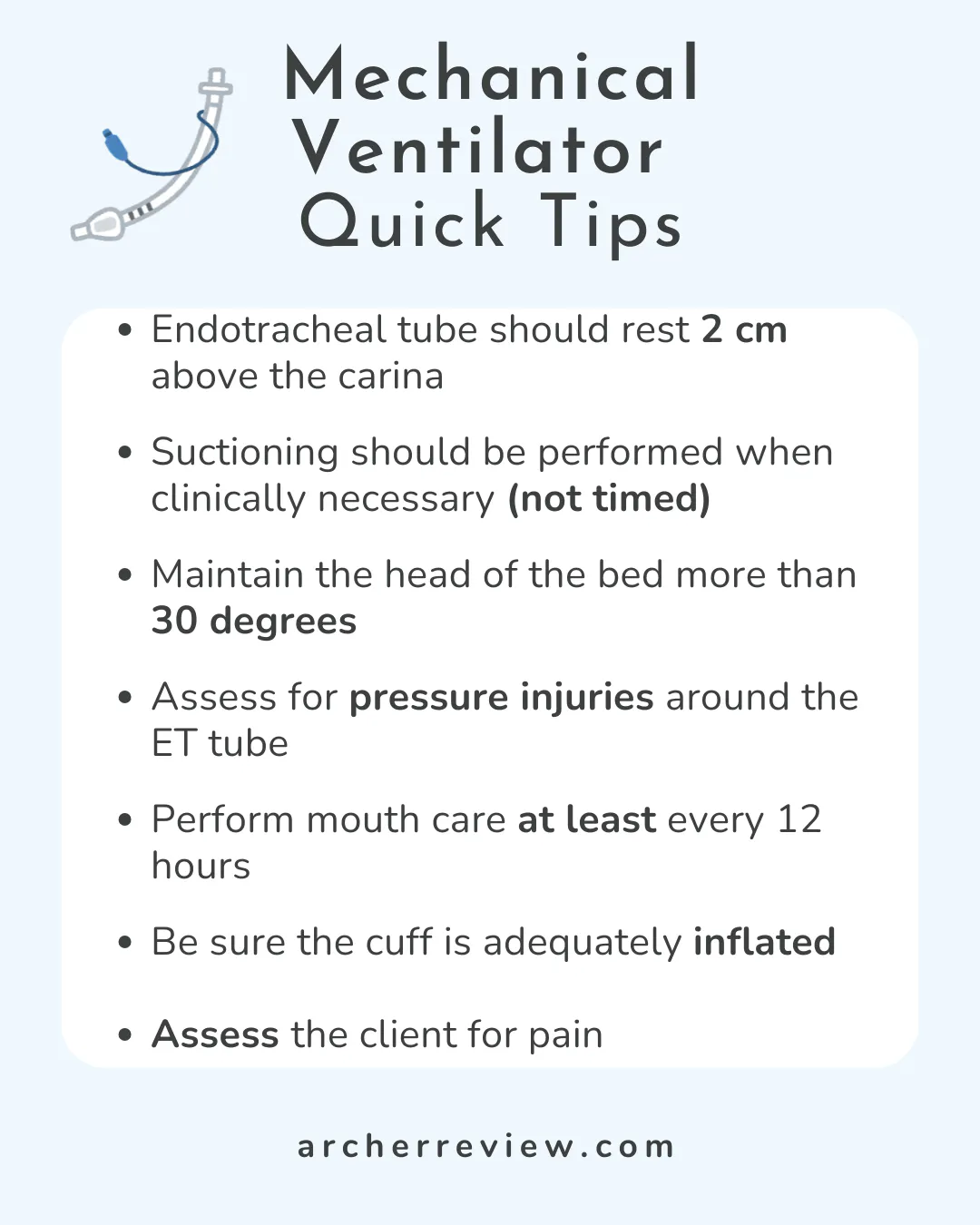
Choice B is incorrect. The correct position for the ET tube tip is typically 2 cm above the carina, not 4 cm. A tube positioned too high can result in ineffective ventilation or inadvertent extubation.
Choice C is incorrect. The cuff must remain inflated to maintain a closed ventilatory circuit, especially when using PEEP. Deflating the cuff can lead to loss of tidal volume, aspiration, and impaired oxygenation.
Related Videos
5 Key Topics
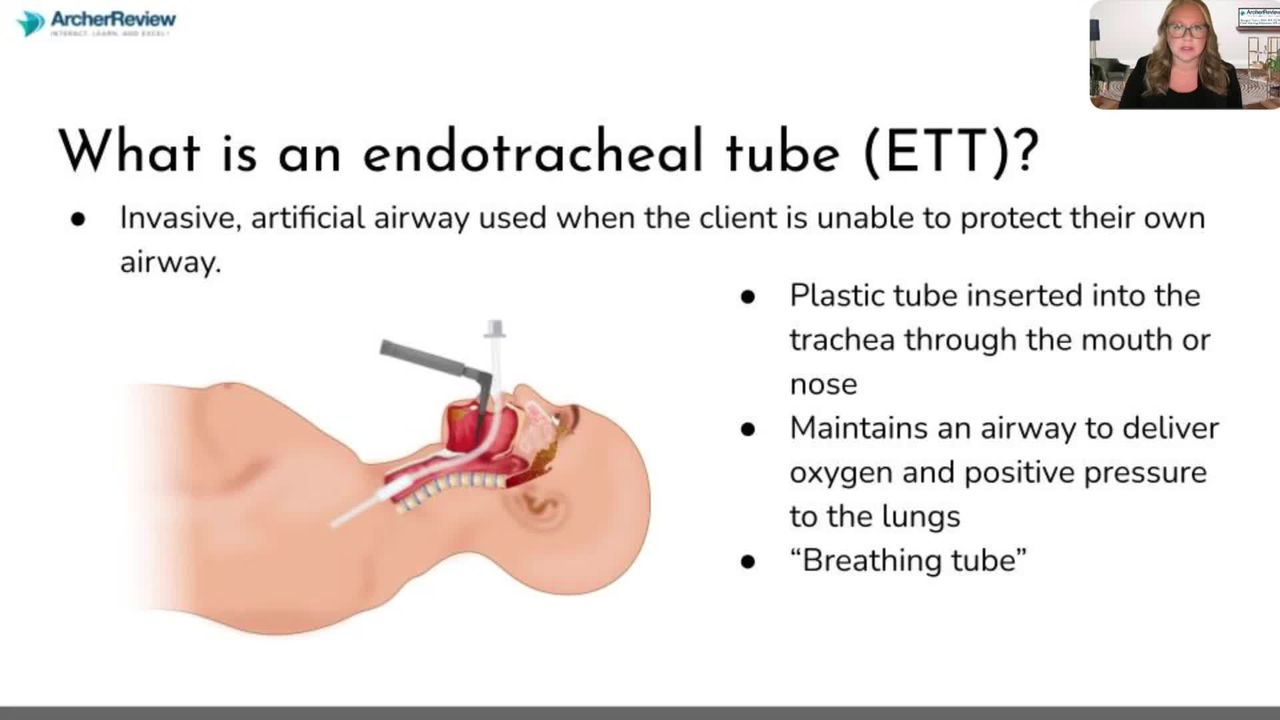
Endotracheal Tubes
27.1 Critical Care Respiratory System
Ventilators- Critical Care
27.1 Critical Care Respiratory System
Additional Info