The nurse is educating the parents of a child diagnosed with impetigo. Which of the following statements, if made by the parent, would indicate effective understanding? Select all that apply.
The nurse is educating the parents of a child diagnosed with impetigo. Which of the following statements, if made by the parent, would indicate effective understanding? Select all that apply.
Statistics
Subject/Lesson
Subject
Child Health
Lesson
Infectious Disease
Client Need
Test Plan
Physiological Adaptation
Related Topic
Illness Management
Item Type
Item Type
Analysis
Explanation
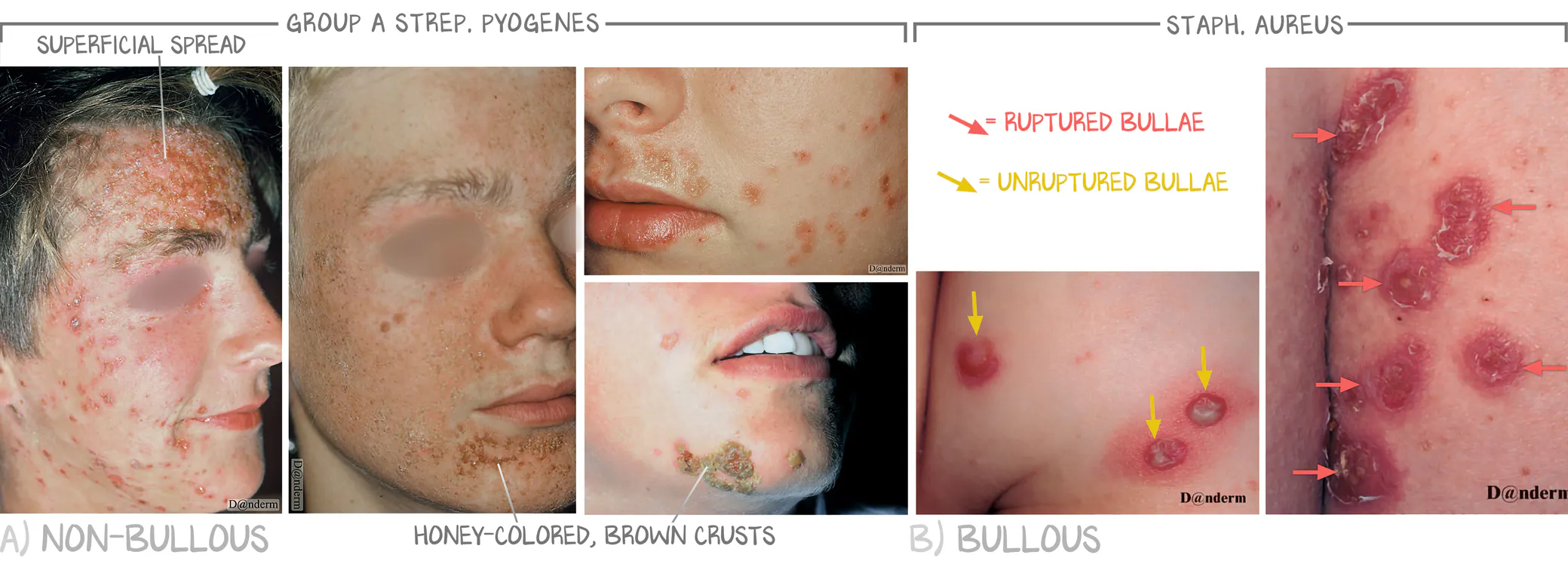
Choices A and D are correct. Impetigo is a skin condition caused by group A Streptococcus (GAS; Streptococcus pyogenes) or Staphylococcus aureus. The condition is highly contagious and spreads by contact with the vesicles. The vesicles should remain clean and dry, and swimming is prohibited because it allows for further disease transmission. Children can return to school 24 hours after beginning antimicrobial therapy if the affected area remains covered. Draining lesions should be kept covered. Linens are an effective way to transmit the bacteria, and they should not be shared and laundered daily to prevent reinfection.
Choices B, C, and E are incorrect. Bacteria, not a virus, cause impetigo. This statement is incorrect because it references flare-ups of herpes which are treated with oral and topical antivirals such as valacyclovir. A mask is not necessary to prevent transmission because this pathogen is spread by contact, not droplets. The draining vesicles should always be kept clean and dry with a bandage. This is a pivotal step in disease transmission.
Related Videos
2 Key Topics
Impetigo
31.15 Dermatologic Conditions & Burns
Additional Info
✓ Impetigo is a contagious skin condition that is caused by Staphylococcus aureus or Streptococcus pyogenes
✓ This condition is commonly found in young children and typically presents around the face, mouth, and then on the hands, neck, and extremities
✓ The lesions have drainage and then begin to crust
✓ Medical treatment is antibacterial ointments that should be applied via a sterile cotton tip applicator
✓ Nursing care focuses on educating the client on hand hygiene, pain control with warm compresses to the affected area, preventing transmission by not sharing linens, etc.
✓ The individual with impetigo should not go into any pools, hot tubs, or saunas to prevent further transmission
✓ The child may return to school if the vesicles are covered and antibiotic treatment has been started for 24 hours