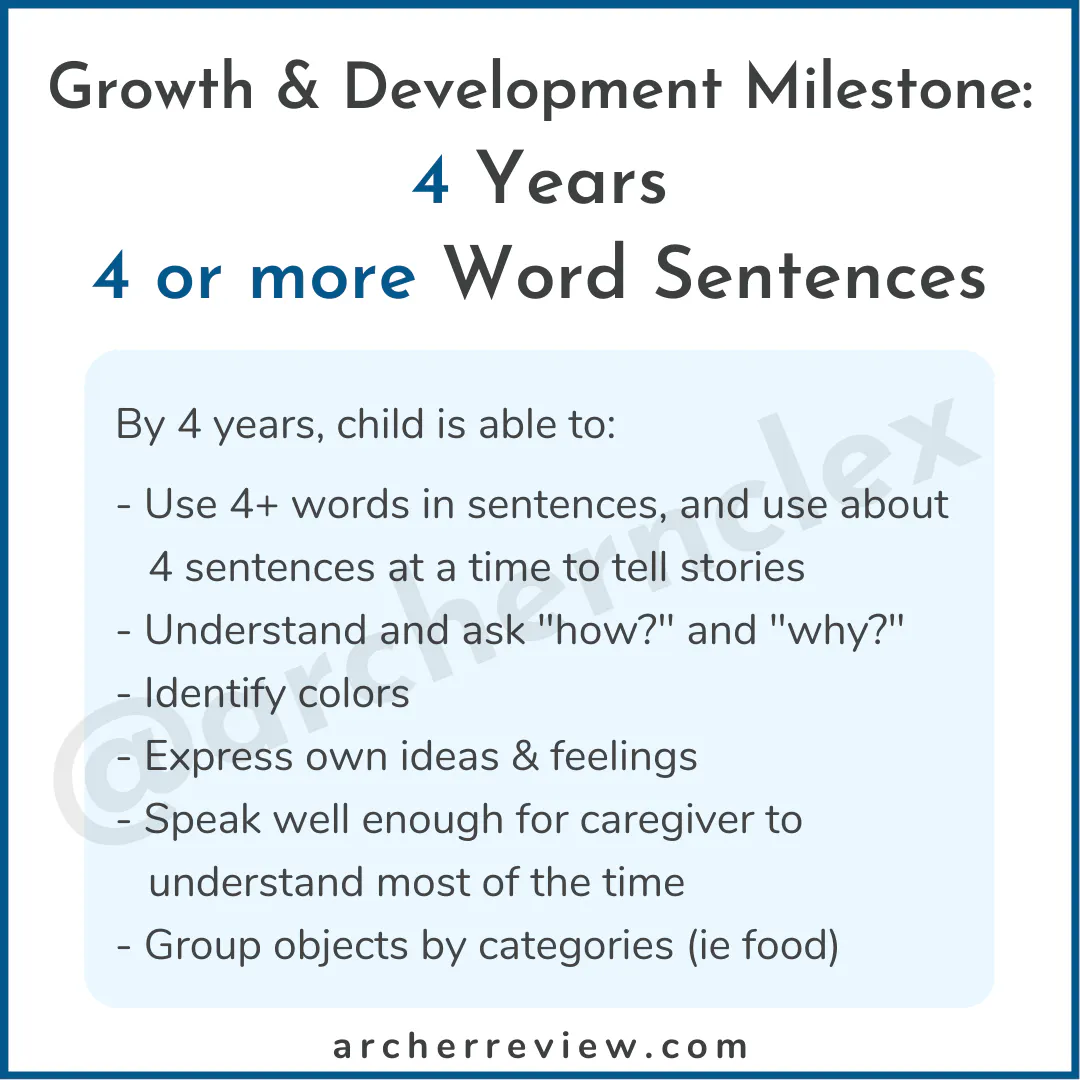
The nurse is caring for a four-year-old child. While developing a plan of care, the nurse recognizes the child is in which stage of Erikson's stages of psychosocial development?
The nurse is caring for a four-year-old child. While developing a plan of care, the nurse recognizes the child is in which stage of Erikson's stages of psychosocial development?
A. Initiative vs. Guilt
[50%]
B. Autonomy vs. Shame and Doubt
[32%]
C. Industry vs. Inferiority
[8%]
D. Trust vs. Mistrust
[10%]
Statistics
Subject/Lesson
Subject
Child Health
Lesson
Growth & Development
Client Need
Test Plan
Health Promotion and Maintenance
Related Topic
Development Stages and Transitions
Item Type
Item Type
Knowledge/Comprehension
Explanation
Choice A is correct. Initiative vs. Guilt is the typical stage of development for preschool children, who are 3 to 5-year-olds, so this is correct for your four-year-old client. In Initiative vs. Guilt, children assert control and power over their environment. Success leads to initiative when they feel a sense of purpose, but children who try to exert too much power and experience disapproval and may feel a sense of guilt.
Choice B is incorrect. Autonomy vs. Shame and Doubt is the typical stage of development for early childhood, which lasts from ages 2 to 3 years, so this is not the correct developmental stage/care plan for a 4-year-old patient. In Autonomy vs. Shame and Doubt, children seek to develop a sense of personal control over physical skills and knowledge of independence. When they are successful, for example, with a task like toilet training, they feel independent, leading to a sense of autonomy. When unsuccessful, they think they are failures, resulting in shame and self-doubt.
Choice C is incorrect. Industry vs. Inferiority is the typical stage of development for school-age children, who are 6 to 11-year-olds. Children need to cope with new social and academic demands at this stage. When they are successful with this, they feel competent and achieve the industry. When they are not successful, they handle failure, resulting in inferiority.
Choice D is incorrect. Trust vs. Mistrust is the typical stage of development for infancy, which lasts from birth to 18 months. In this stage, children develop confidence when caregivers provide reliability, care, and affection. When infants do not have that, they will build mistrust.
Related Videos
3 Key Topics
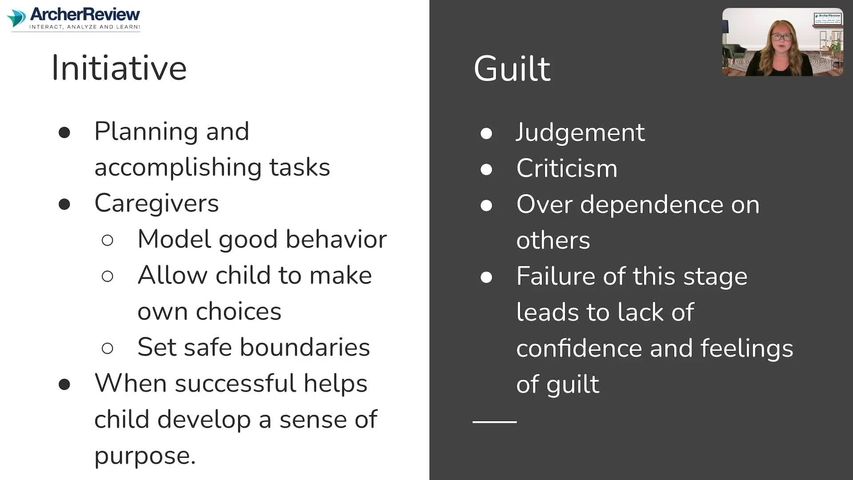
Preschooler Growth and Development