The new registered nurse (RN) is caring for a preschool-aged pediatric client in the pediatric ward under the supervision of a nurse educator. Which statement by the new RN indicates to the nurse educator that the new RN understands how to provide age-appropriate care to the preschooler?
The new registered nurse (RN) is caring for a preschool-aged pediatric client in the pediatric ward under the supervision of a nurse educator. Which statement by the new RN indicates to the nurse educator that the new RN understands how to provide age-appropriate care to the preschooler?
A. “We can convince the preschooler to cooperate with us by providing a thorough explanation of the procedure.”
[6%]
B. "We need to ensure that the preschooler doesn't feel threatened about being hurt during nursing care by explaining what we are doing and assessing understanding."
[66%]
C. "We can make the preschooler more cooperative by involving them in competitive games."
[21%]
D. "The preschooler should not wait to have their needs met."
[6%]
Statistics
Subject/Lesson
Subject
Child Health
Lesson
Growth & Development
Client Need
Test Plan
Health Promotion and Maintenance
Related Topic
Development Stages and Transitions
Item Type
Item Type
Analysis
Explanation
Choice B is correct. A preschool-age client has many fears at this stage. One concern at this age is the fear of pain or, more specifically, mutilation. For children who possess this specific fear, it is essential that the nurse repeatedly stress the reason for a procedure and evaluate the pediatric client's understanding. For example, explaining cast removal to a preschooler client may seem simple enough, but the child's comprehension of the details may vary considerably from the explanation.
Choice A is incorrect. Preschoolers increasingly use language without comprehending the meaning of words. Therefore, the nurse should provide a simple explanation to the child, not a thorough explanation, as preschool children are only capable of simple reasoning.
Choice C is incorrect. Various types of play are typical of the preschool period, but children in this age group especially enjoy associative play (i.e., group play in similar or identical activities but without rigid organization or rules). Therefore, involvement in competitive games or sports is not typical at this age.
Choice D is incorrect. The ability to tolerate delayed gratification typically begins during toddlerhood. During the preschool years, the child should be able to handle increased periods of delayed gratification. There is no specific need to provide instant gratification during the preschool years.
Learning Objective
When caring for a preschool-aged pediatric client in the pediatric ward under the supervision of a nurse educator, correctly identify, "[w]e need to ensure that the preschooler doesn't feel threatened about being hurt during nursing care by explaining what we are doing and assessing understanding" as the statement by the new RN to the nurse educator that indicates the new RN understands how to provide age-appropriate care to the preschooler.
Related Videos
4 Key Topics
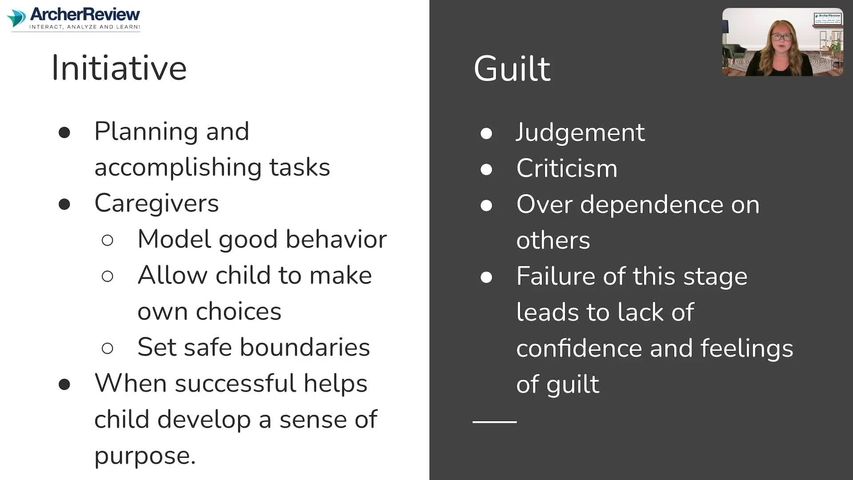
Preschooler Growth and Development
14.9 Preschooler Growth and Development
Preschooler Education
14.9 Preschooler Growth and Development
Additional Info
- Preschoolers assume that everyone thinks as they do and that a brief explanation of their thinking makes the entire thought understood by others.
- For children in this age group, the most enlightening and effective method is play, which becomes the child's way of understanding, adjusting to, and working out life's experiences.
