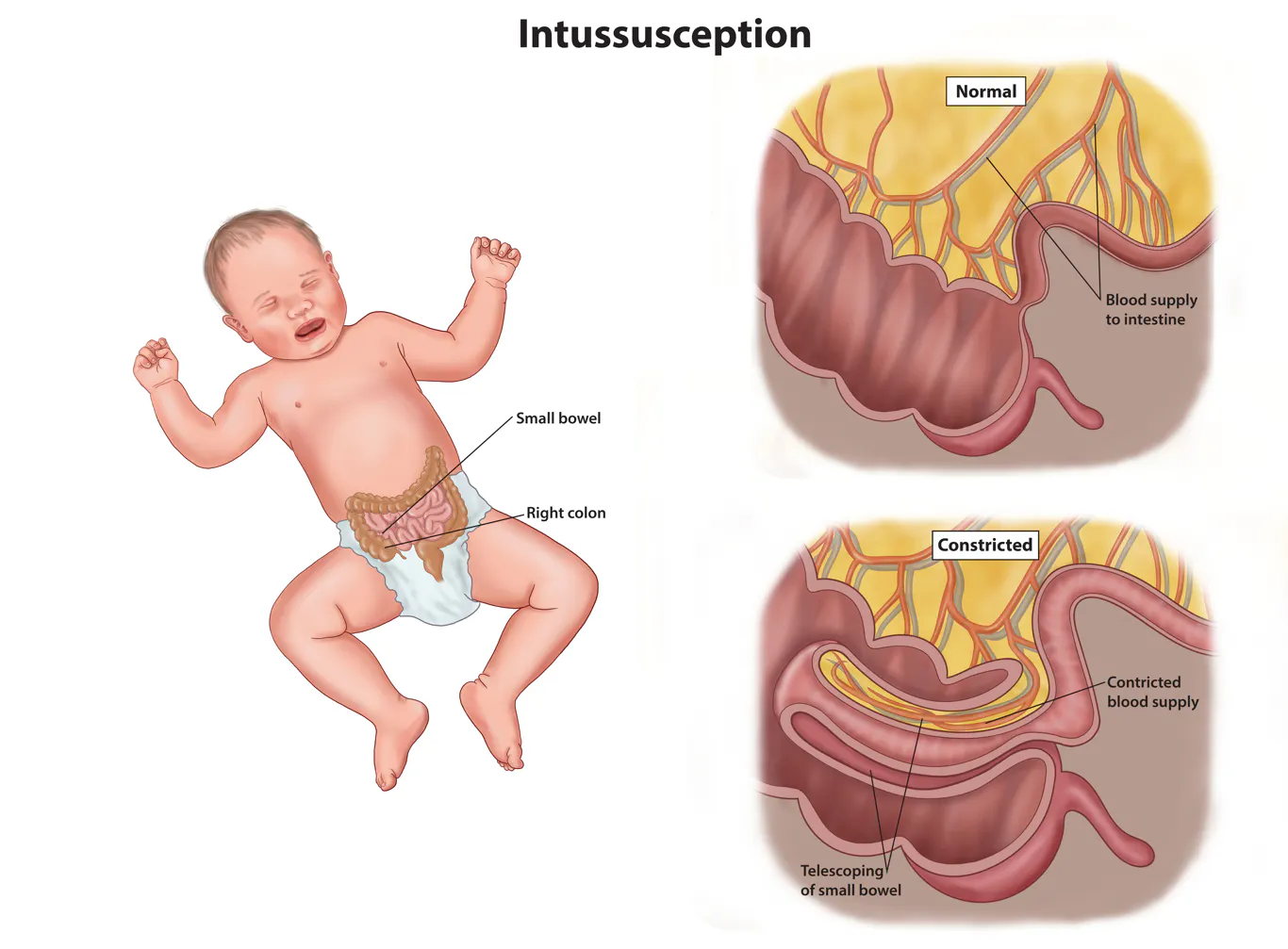
A nurse in the pediatric unit is caring for a client with a gastrointestinal condition where a portion of the bowel folds into itself, causing an obstruction.
The nurse would be correct in identifying this condition as which of the following?
A nurse in the pediatric unit is caring for a client with a gastrointestinal condition where a portion of the bowel folds into itself, causing an obstruction.
The nurse would be correct in identifying this condition as which of the following?
A. Intussusception
[78%]
B. Pyloric stenosis
[7%]
C. Hirschsprung’s disease
[11%]
D. Omphalocele
[3%]
Statistics
Subject/Lesson
Subject
Child Health
Lesson
Gastrointestinal
Client Need
Test Plan
Physiological Adaptation
Related Topic
Alterations in Body Systems
Item Type
Item Type
Analysis
Explanation
Choice A is correct. A gastrointestinal disease of childhood where a piece of bowel goes backward into itself, causing an obstruction, is called intussusception. This condition occurs when a part of the intestine folds into itself, much like a telescope. This can cause symptoms such as abdominal pain, vomiting, and the passage of red, jelly-like stools.
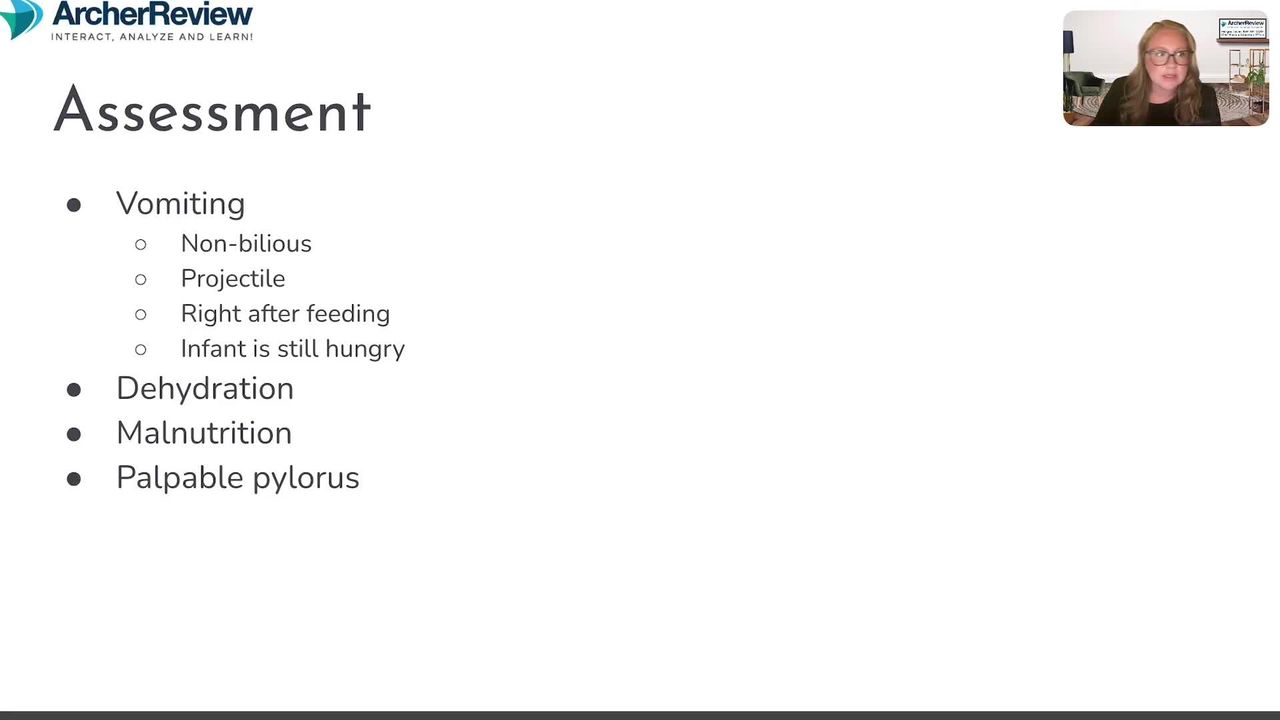
Choice B is incorrect. This condition involves the narrowing of the pylorus, which is the passage between the stomach and the small intestine. It typically presents in infants with projectile vomiting, dehydration, and a palpable olive-shaped mass in the abdomen. However, it does not involve the bowel folding into itself and causing obstruction.
Choice C is incorrect. Hirschsprung’s disease is a congenital condition characterized by the absence of ganglion cells in the distal colon, leading to a lack of peristalsis and chronic constipation. While it does cause bowel obstruction, it does not involve the bowel folding into itself.
Choice D is incorrect. Omphalocele is a congenital defect where the intestines, liver, and sometimes other organs remain outside the abdomen in a sac because of a defect in the development of the abdominal wall muscles. It is typically diagnosed at birth and is not related to the bowel folding into itself.
Related Videos
2 Key Topics
Intussusception
31.11 GI Obstructions & Abdominal Wall Defects
Additional Info