A 16-year-old male presents to the emergency department with right leg pain.
Item 1 of 1
- Nurses’ Note
1545 – A 16-year-old male arrives with his parents at the emergency department reporting right lower leg pain. He points to his shin as the area of pain. The client was participating in football practice when he collided with another individual. He reports that he cannot bear any weight on the extremity and was carried off the field. He reports his pain as a ‘9’ on a scale from 0 to 10, described as ‘throbbing.’ The extremity is tender to touch and swollen. The right ankle and knee have full range of motion. The lower extremity has ecchymosis. Peripheral pulse was 2+ with intact sensation.
Complete the following sentence by using the list of options
Complete the following sentence by using the list of options
The client is most likely experiencing a

and the nurse should

Statistics
Subject/Lesson
Subject
Adult Health
Lesson
Musculoskeletal
Client Need
Test Plan
Physiological Adaptation
Related Topic
Alterations in Body Systems
Item Type
Item Type
PrioritizeHypothesis
Explanation
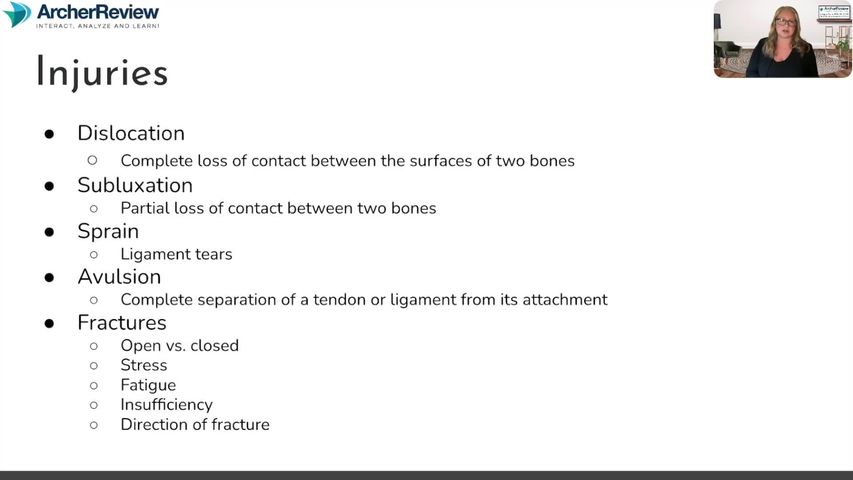
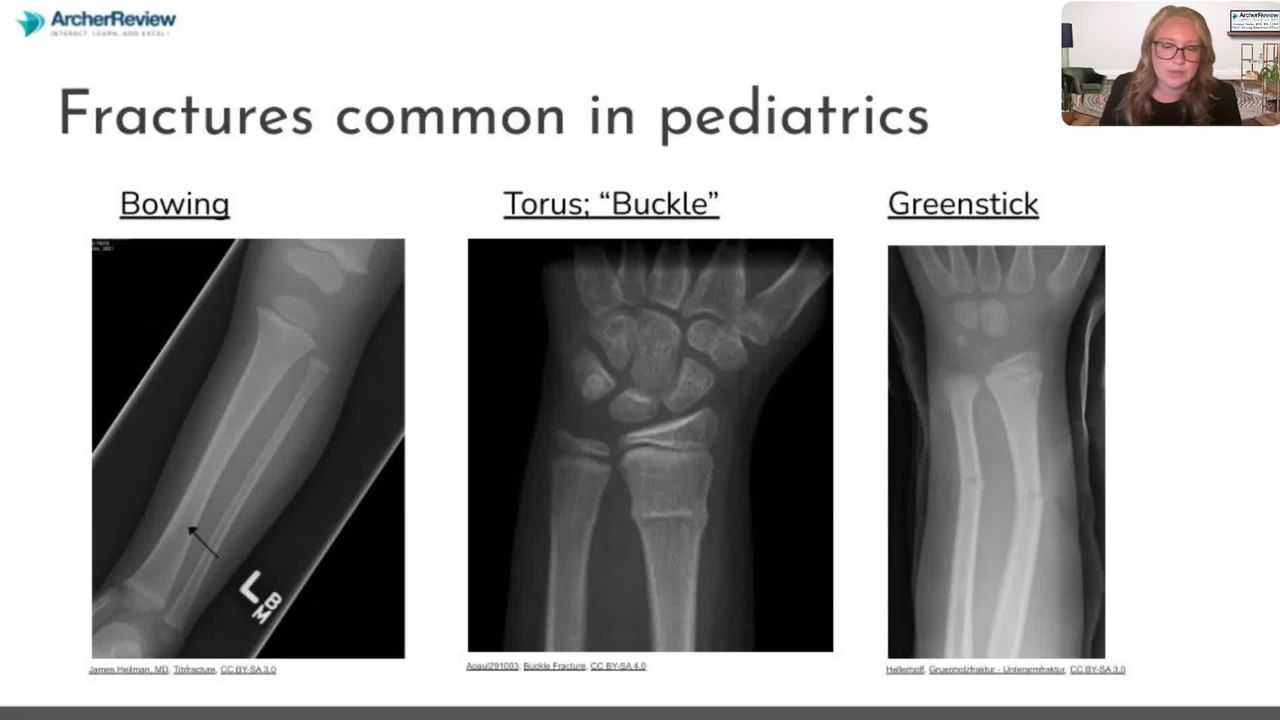
- This client demonstrates classic signs of a fracture (pain with movement, swelling, ecchymosis).
- Thus, an initial intervention would be immobilizing the extremity to prevent neurovascular damage.
- Obtaining a prescription for acetaminophen would not be helpful because this client’s pain is at ‘9’, and acetaminophen is indicated for mild-to-moderate pain. This client will benefit from a prescribed opioid, considering their reported pain level.
- Applying heat to the area is not recommended in the acute period following a fracture, as elevating the fractured extremity higher than the heart and applying ice for the first 24 to 48 hours as needed to reduce edema.
- Dislocation is not likely because the injury is not within a joint space. Generally, dislocations may present with an obvious deformity in the joint space (shoulder, etc.). Further, the assessment revealed a full range of motion of the extremity, excluding a dislocation.
- A contracture results from disuse, atrophy, and shortening of the muscle fibers. When a contracture occurs, the joint cannot achieve full ROM. This client has a full range of motion in their extremity.
Related Videos
4 Key Topics
Fractures
22.3 Injuries & Fractures
Fractures- Pediatrics
31.13 Musculoskeletal Injuries & Disorders
Additional Info
✓ Removing clothing and jewelry on the affected extremity is essential for a client with a suspected or confirmed fracture because this will prevent neurovascular compromise.
✓ The nurse should assess the neurovascular status of the extremity, including the pulse, temperature, movement, color, sensation, and capillary refill time.
✓ Finally, the affected extremity should be immobilized to prevent further injury.
