The nurse is providing discharge instructions to a client with hepatitis A. Which of the following instructions should the nurse include?
The nurse is providing discharge instructions to a client with hepatitis A. Which of the following instructions should the nurse include?
A. You will need to take daily showers or baths with chlorhexidine.
[3%]
B. It is important to clean common surfaces with warm soapy water.
[22%]
C. You will need to have repeat stool testing to determine if you are still infectious.
[31%]
D. Check with your primary healthcare provider prior to taking any medications.
[43%]
Statistics
Subject/Lesson
Subject
Adult Health
Lesson
Infectious Disease
Client Need
Test Plan
Physiological Adaptation
Related Topic
Illness Management
Item Type
Item Type
Knowledge/Comprehension
Explanation
Choice D is correct. While a client is being treated for hepatitis, they should consult with their primary healthcare provider, so they are not taking any medications or substances that are hepatotoxic. Exposing a client with hepatitis to a hepatotoxic medication would significantly complicate their recovery.
Choices A, B, and C are incorrect. Having the client shower with chlorhexidine is not an appropriate teaching point for hepatitis A. The pathogen spreads through contaminated food, water, and surfaces. The primary mode of transmission is fecal-oral. Surfaces contaminated with hepatitis should be sanitized with a bleach solution, not warm soapy water. Repeat stool testing is not indicated for hepatitis as diagnosis of hepatitis is made through serum hepatitis-A antibodies.
NCLEX Category: Physiological Adaptation
Activity Statement: Illness management
Question type: Knowledge/comprehension
Related Videos
3 Key Topics
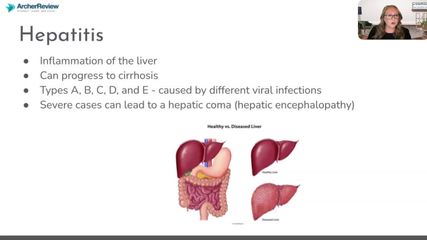
Hepatitis
20.8 Liver Disorders & Failure
Additional Info
Hepatitis A is an infection contracted through the consumption of raw or undercooked food, fecal-oral route, or contaminated water. Most cases are self-limiting with complete clinical recovery within three to six months. Vaccination for hepatitis A is a two-dose series beginning as early as six months for international travel; 12 months for routine vaccination.
