The nurse cares for a client who arrived at the emergency department (ED) complaining of generalized weakness
Item 1 of 1
- History and Physical
23-year-male arrives at the emergency department (ED) reporting a headache, feeling unwell, fatigue, and thirst. The symptoms started one day ago and have worsened. He could not check his blood glucose because he reports being out of testing supplies for two weeks.
On exam, the client reports feeling fatigued and thirsty. He is lethargic and completely oriented. His physical exam revealed sunken eyes, skin that was hot to the touch, very dry mucous membranes, with white patches on his tongue.
The client has a medical history of type I diabetes mellitus.
- Vital Signs
Oral Temperature 100o F (37.8o C)
Pulse 123/minute
Respirations 24/minute
Blood pressure 94/50 mm Hg
O2 saturation 96% on room air
- Laboratory
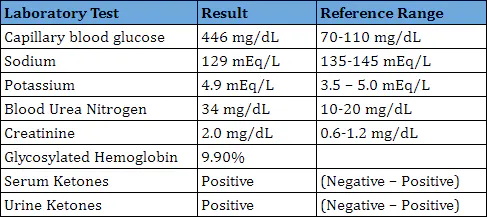
Complete the sentence below from the list of options
Complete the sentence below from the list of options
The client is at highest risk of developing

based on the client’s

Statistics
Subject/Lesson
Subject
Adult Health
Lesson
Endocrine
Client Need
Test Plan
Physiological Adaptation
Related Topic
Medical Emergencies
Item Type
Item Type
PrioritizeHypothesis
Explanation
- The client is exhibiting signs of diabetic ketoacidosis (DKA). The data supporting the client's DKA risk include hyperglycemia, positive urine, serum ketones, and dehydration (elevated BUN).
- The client's medical history of diabetes mellitus type I was telling because DKA is a common complication of this type of diabetes (HHS being a common complication of diabetes mellitus type II).
- Metabolic alkalosis is not a finding associated with DKA, as the client develops metabolic acidosis from hyperglycemia.
- The glycosylated hemoglobin is elevated, but this is not a marker for a client with an acute complication of DKA.
Related Videos
2 Key Topics
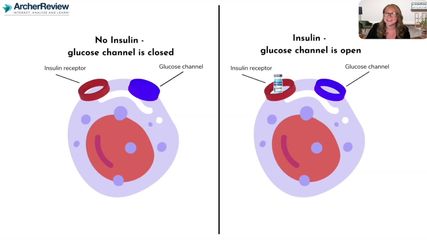
Diabetes Mellitus Type I
19.10 Diabetes Mellitus & Glycemic Control
Additional Info
DKA is a common complication associated with type one diabetes mellitus. DKA may cause both hyperglycemia and hypovolemia.
- Treatment for hyperglycemia includes the initiation of a prescribed regular insulin bolus at 0.1 unit/kg followed by a continuous infusion at 0.1 unit/kg/hr. This treatment will also target the acidosis found with DKA.
- Treatment for hypovolemia includes the initiation of isotonic saline infusions at 15 to 20 ml/kg during the first hour. Fluid volume treatment has been effective when urine output restores to normal, the heart rate is within normal limits, and the client is normotensive.
For the client receiving regular insulin, close monitoring of their blood glucose and potassium is essential. The most common complications of regular insulin therapy are hypoglycemia and hypokalemia.