The nurse is caring for a client diagnosed with acute pericarditis. Which complication is the client at risk for developing?
The nurse is caring for a client diagnosed with acute pericarditis. Which complication is the client at risk for developing?
A. cardiac tamponade
[84%]
B. hemothorax
[2%]
C. pulmonary embolism
[7%]
D. tension pneumothorax
[6%]
Statistics
Subject/Lesson
Subject
Adult Health
Lesson
Cardiovascular
Client Need
Test Plan
Reduction of Risk Potential
Related Topic
Potential for Alterations in Body Systems
Item Type
Item Type
Knowledge/Comprehension
Explanation
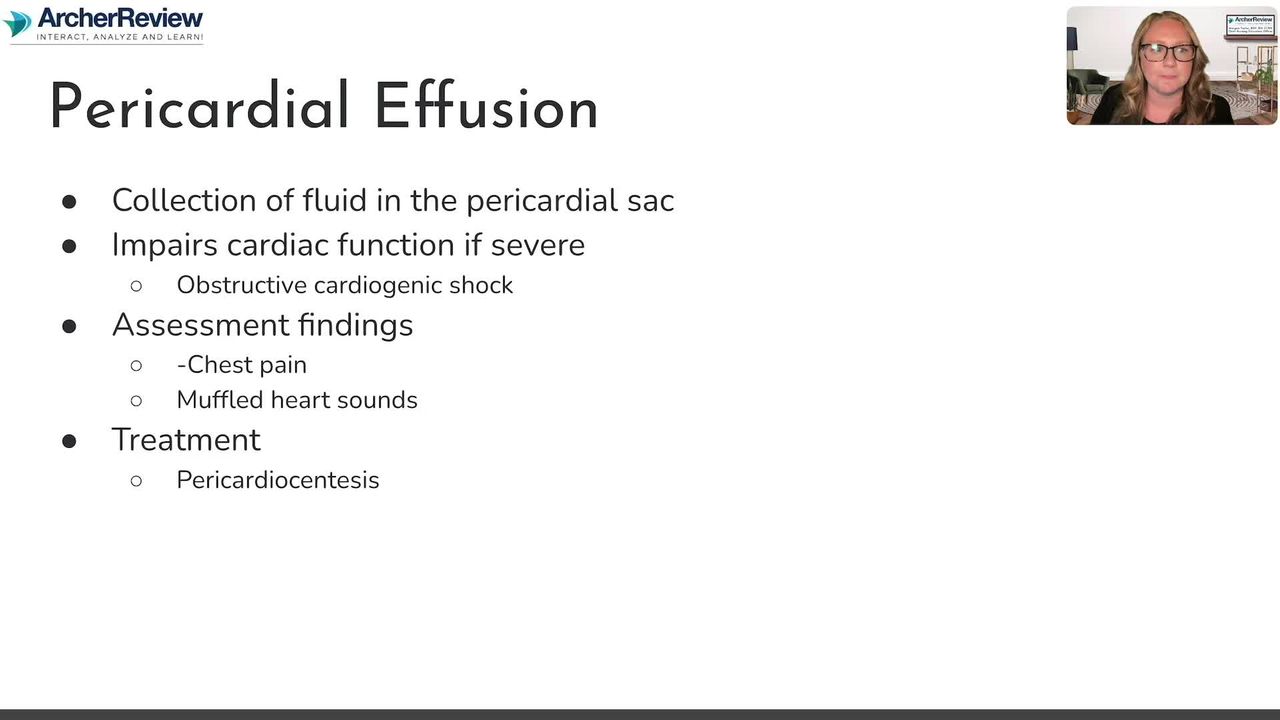
Choice A is correct. A significant complication of acute pericarditis is cardiac tamponade. In cardiac tamponade, the cardiac chambers are compressed by pericardial pressure. Specifically, this compression impedes cardiac filling (diastolic pressure). Manifestations of this medical emergency include tachycardia, hypotension, pulsus paradoxus, which is an abnormally large decrease in systolic blood pressure (>10 mmHg) on inspiration.
Choice B is incorrect. Hemothorax is not a complication associated with pericarditis. Hemothorax occurs if a client sustains blunt force trauma.
Choice C is incorrect. Pulmonary embolism is not a complication associated with pericarditis. PE commonly occurs if a client has a venous thromboembolism that dislodges and migrates upward.
Choice D is incorrect. Tension pneumothorax is not a complication associated with pericarditis. This is a complication found with a regular pneumothorax or significant blunt force trauma.
Related Videos
4 Key Topics
Pericarditis
18.12 Heart Disorders
Cardiogenic Shock
27.5 Shock
Additional Info
✓ Acute pericarditis is caused by other conditions such as pulmonary tuberculosis, autoimmune disorder (lupus, rheumatoid arthritis), cancer, and HIV/AIDS.
✓ Significant complications of acute pericarditis include pericardial effusion or cardiac tamponade.
✓ Acute pericarditis can be managed with NSAIDs, colchicine, or glucocorticoids.
✓ Major side effects of colchicine include gastrointestinal upset, which may be mitigated by taking this medication with food.
✓ Colchicine may be added to NSAID therapy adjunctively to maximize treatment response.
