The nurse is caring for a client with Buerger’s disease who reports increased discomfort in the hands and feet after exposure to cold and using tobacco products.
The nurse plans on suggesting that the client receive a referral for:
The nurse is caring for a client with Buerger’s disease who reports increased discomfort in the hands and feet after exposure to cold and using tobacco products.
The nurse plans on suggesting that the client receive a referral for:
A. occupational therapy.
[31%]
B. speech therapy.
[15%]
C. smoking cessation.
[50%]
D. group psychotherapy.
[4%]
Statistics
Subject/Lesson
Subject
Adult Health
Lesson
Cardiovascular
Client Need
Test Plan
Physiological Adaptation
Related Topic
Illness Management
Item Type
Item Type
Application
Explanation
Choice C is correct. Buerger’s disease involves inflammation and occlusion of small and medium blood vessels in the extremities, causing impaired circulation. Tobacco use, whether through smoking or chewing, significantly exacerbates vasoconstriction and worsens symptoms. Because continued tobacco exposure directly contributes to disease progression, referral for smoking cessation is the most critical intervention to help prevent further vascular compromise.
Choice A is incorrect. Occupational therapy may be useful for clients who have difficulty performing daily activities, but it does not address the primary cause of disease progression. It is not the priority referral in this scenario.
Choice B is incorrect. Speech therapy has no role in the management of Buerger’s disease and does not relate to the client’s symptoms or risk factors.
Choice D is incorrect. Group psychotherapy may support overall coping, but it does not address the underlying vascular condition or the major modifiable risk factor contributing to symptom worsening.
Related Videos
2 Key Topics
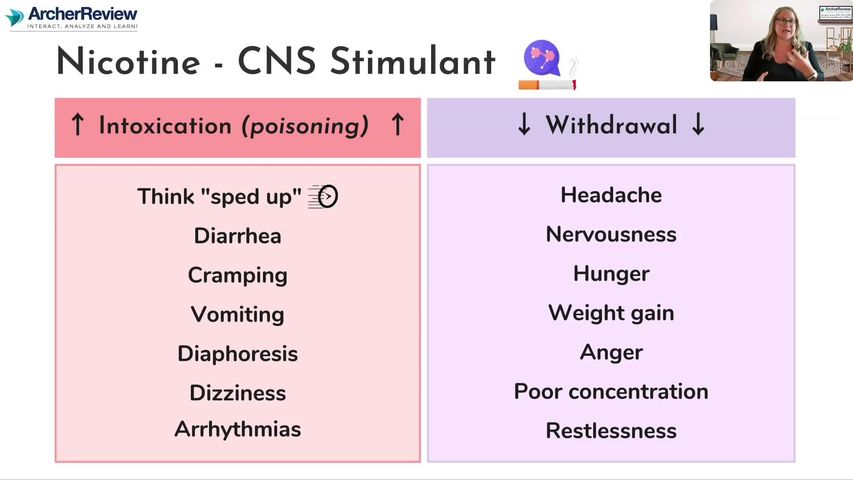
Substance abuse
13.4 Substance Use & Family Systems
Additional Info
Buerger's disease is characterized by arterial and venous inflammation worsened by smoking. The nurse should advocate for smoking cessation to minimize symptoms. Prescriptive treatments include calcium channel blockers (verapamil) or phosphodiesterase inhibitors (cilostazol).
