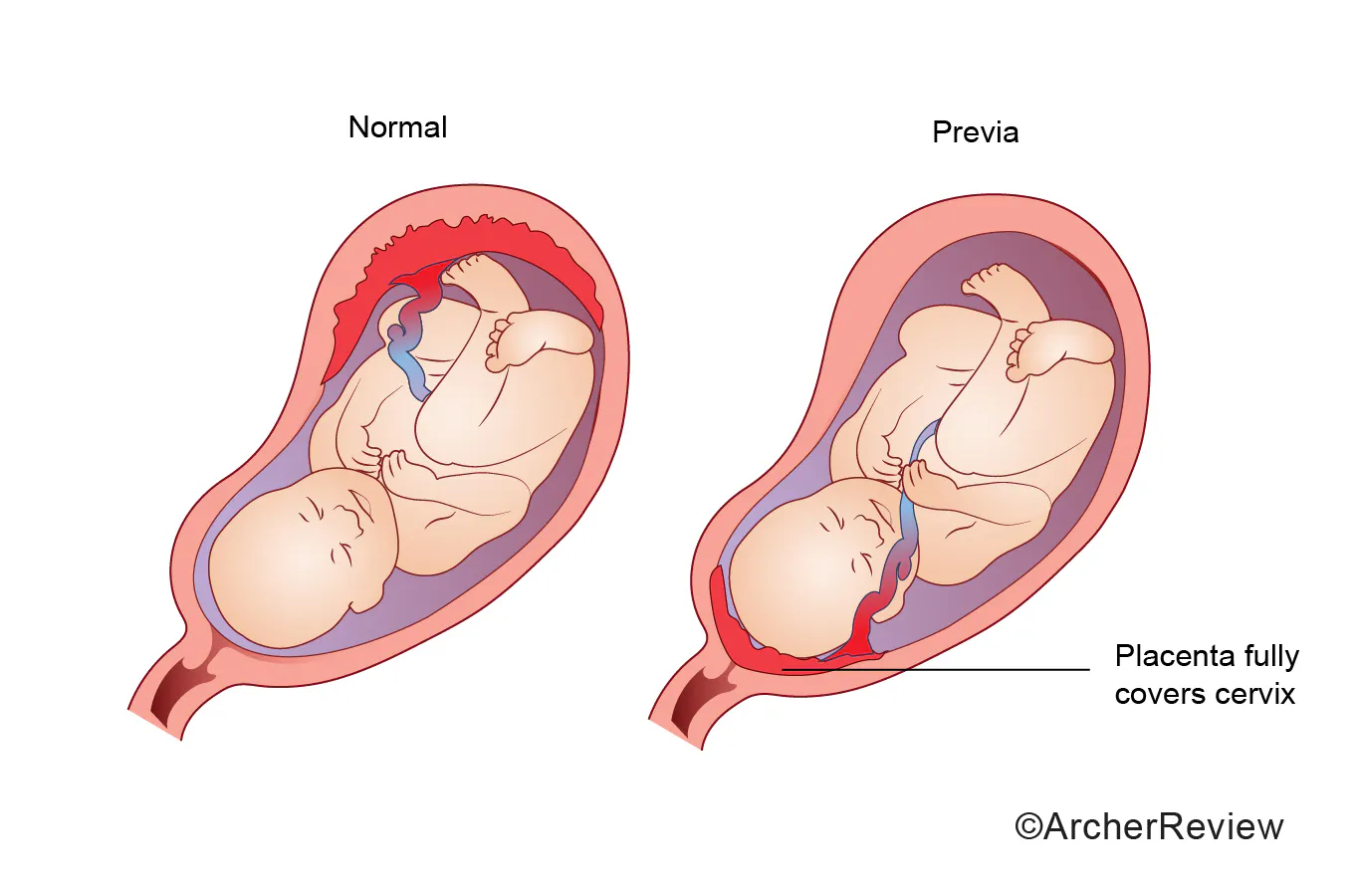
The nurse notes that the 39-week pregnant client is experiencing placenta previa. Knowing the contexts surrounding this condition, the nurse refrains from performing which of the following standard procedures?
The nurse notes that the 39-week pregnant client is experiencing placenta previa. Knowing the contexts surrounding this condition, the nurse refrains from performing which of the following standard procedures?
A. Ultrasonography of the uterus
[7%]
B. Palpating the uterus to determine fetal arrangement
[13%]
C. Checking the cervix for dilation
[75%]
D. Placing the patient on the left side
[5%]
Statistics
Subject/Lesson
Subject
Maternal & Newborn Health
Lesson
Antepartum
Client Need
Test Plan
Health Promotion and Maintenance
Related Topic
Ante/Intra/Postpartum and Newborn Care
Item Type
Item Type
Application
Explanation
Choice C is correct. If the prenatal client has a current case of placenta previa, the cervix should not be assessed for dilation. Placenta previa arises when the placenta develops in a problematic spot, close to or over the cervical os. To prevent bleeding or premature labor, women with placenta previa shouldn’t have their cervix checked manually. Instead, an ultrasound may be performed.
Choice A is incorrect. Ultrasounds may be used safely in women with placenta previa. Ultrasounds are the safest way to assess cervical dilation in a woman with this issue.
Choice B is incorrect. If the physician requires, the nurse may safely palpate the abdomen and thus the uterus of a woman whose pregnancy is difficult because of placenta previa.
Choice D is incorrect. Laying on her left side is an often-used position for pregnant women, including those with placenta previa. This position increases circulation to the fetus and is often a comfortable position for laboring women.
Related Videos
2 Key Topics
Placenta Previa
30.4 Intrapartum Complications
Additional Info